
An Ode to Pushbullet: A Digital Bridge That Once Connected My Worlds
I still remember the first time my worlds clicked into place. It was 2014, and the constant ping of my phone was a siren call, pulling me away from the flow of my work on the PC. The dance was all too familiar: glance down, unlock, read, lock, refocus—a tiny, jarring fracture in my concentration a dozen times a day. Then came Pushbullet. It wasn't just an app; it was a revelation, a quiet miracle that stitched my digital life together. For nearly a decade, it was the first app I'd install on any new Android, a non-negotiable pillar of my workflow. It made the connection between phone and PC feel not just possible, but poetic.
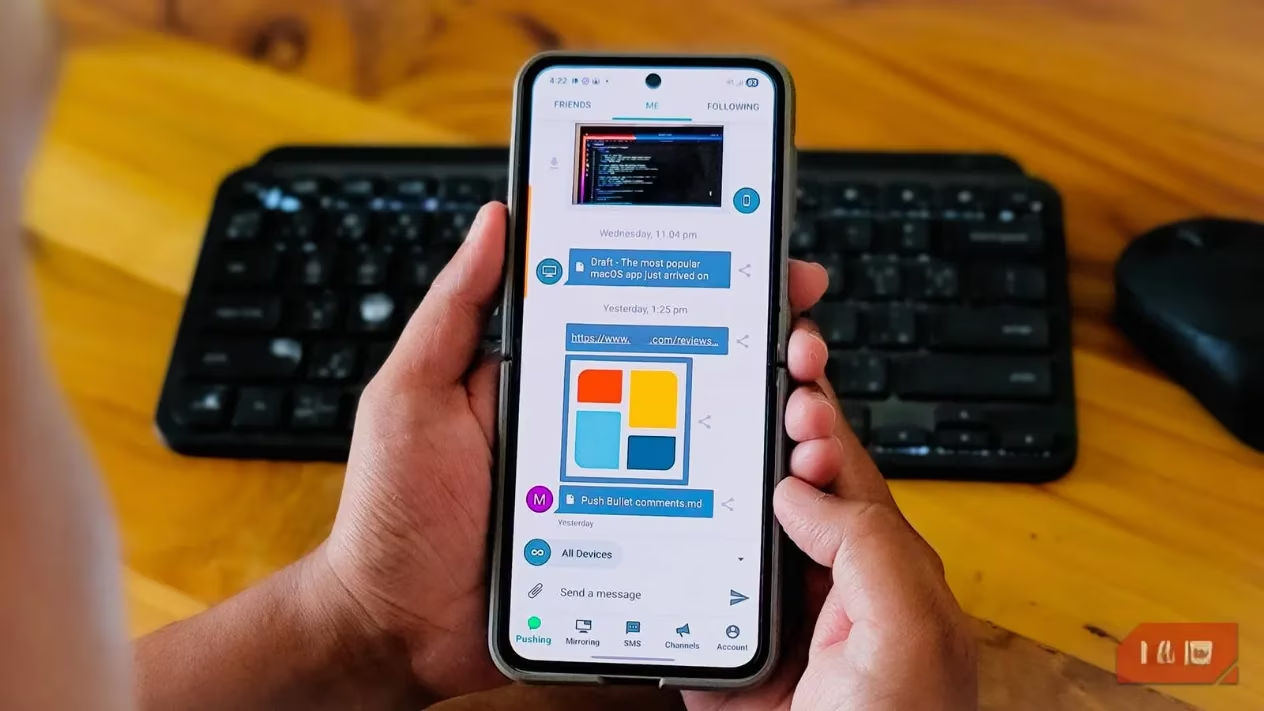
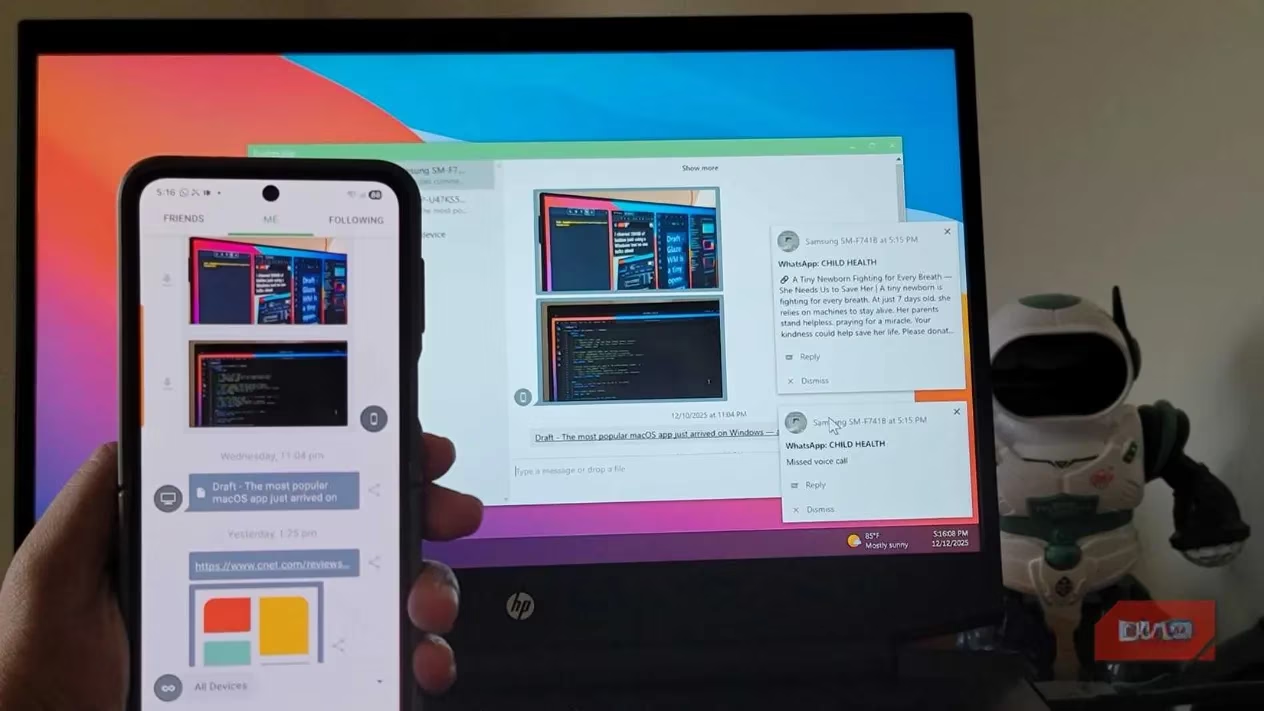
In its prime, Pushbullet was the epitome of elegance. The setup was a breeze—install the mobile app, add the browser extension, and voilà—magic happened. Notifications from my phone would materialize as gentle, unobtrusive bubbles on my desktop. I could see texts, app alerts, even incoming calls without ever reaching for the slab in my pocket. But it was more than a mirror; it was a conduit. With a simple tap, I could push a link from my phone straight to my PC browser, watching it bloom on the larger screen. Sharing files between devices felt like passing a note across a table, not uploading to some distant cloud. Sending an SMS from my computer keyboard was a productivity game-changer. It was seamless, it was fast, and above all, it was free. It filled a gap I didn't even fully know existed, and for a long time, it felt like the future had arrived early.
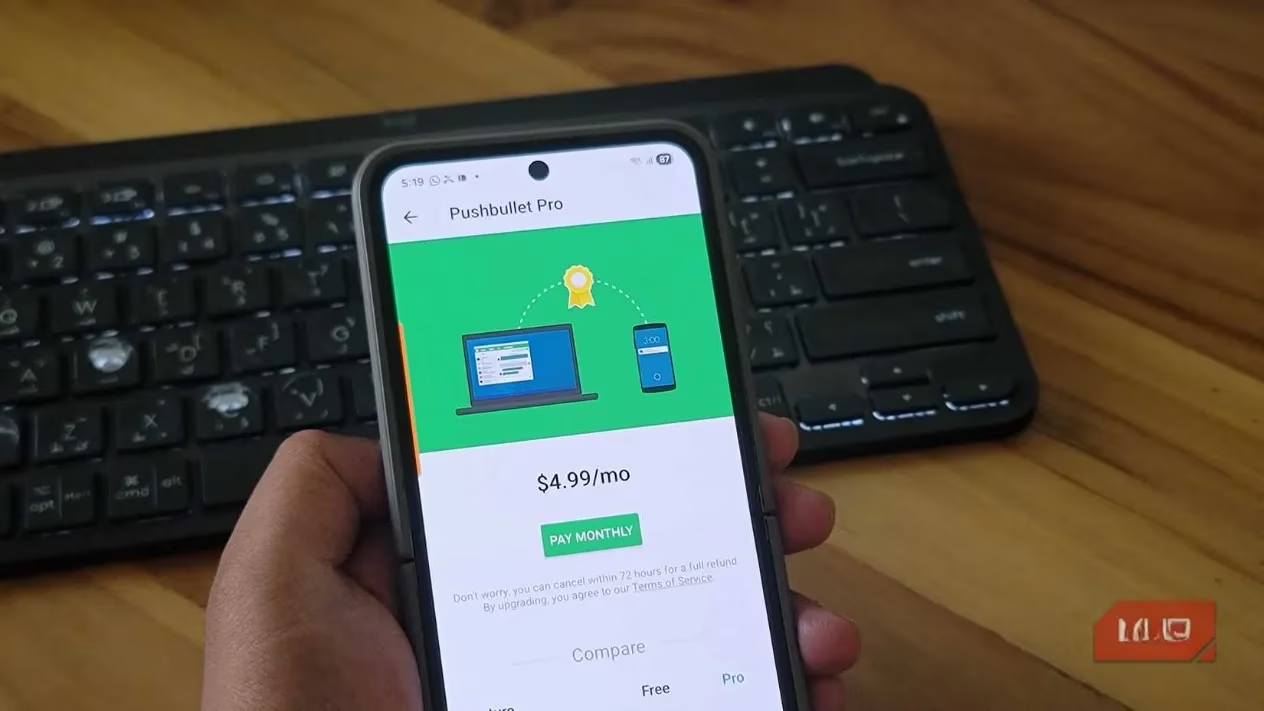
Then, the winds shifted. The quest for profitability, a tale as old as Silicon Valley itself, began to alter the landscape. The introduction of the Pro plan wasn't inherently the issue—developers deserve to eat, after all. The sting was in the execution. Features that had been the bedrock of the free experience—universal copy-paste, unlimited SMS, full notification mirroring—were suddenly locked behind a $40-a-year paywall. It felt less like unlocking new potential and more like renting back the tools from my own shed. Around the same time, the app seemed to suffer an identity crisis. It started morphing into a cluttered messaging platform, burying its brilliant, core utilities under layers of social features nobody asked for. The clean, focused utility I loved began to feel bloated, a jack-of-all-trades losing its masterful touch.
The final, symbolic blow came from an external force: Chrome's Manifest V3. When Google sunset support for the old extension framework, Pushbullet's lifeline to the browser—the very element that made it feel so integrated—was severed. The extension now auto-disables on modern Chrome, Edge, and other Chromium browsers. The developer's silence on an update spoke volumes. Sure, the Windows app and a web workaround still exist, but for someone like me, whose digital life is lived within the browser, the magic was gone. The seamless bridge had developed a toll booth and then a crack right down the middle.
So, where does that leave me in 2026? Out with the old, in with the... integrated. My search for alternatives led me to a one-two punch that has more than filled the void:
-
Microsoft's Phone Link: This has become my new cornerstone. It's baked right into Windows 11, which means no extra installs and a promise of active updates from a tech giant. It does everything that made Pushbullet essential for me:
-
📲 Notification Mirroring (Calls, texts, app alerts)
-
💬 SMS from my PC
-
📁 File Sharing (on supported devices)
-
🖥️ Screen Mirroring & Gallery Browsing
-
🎥 Phone-as-a-Webcam functionality
It's reliable, polished, and feels like a first-class citizen in the Windows ecosystem.
-
-
Blip for File Sharing: For those instant, large file transfers that need to zip between devices, I turned to Blip. It's a lightweight, local Wi-Fi tool with end-to-end encryption. No clouds, no subscriptions, just a fast, secure pipe. Talk about a game-changer!
| My Needs | Pushbullet (Then) | My Solution (Now - 2026) |
|---|---|---|
| Notification Mirroring | ✅ (Then paywalled) | ✅ Phone Link (Native) |
| SMS from PC | ✅ (Then limited) | ✅ Phone Link (Unlimited) |
| Instant File Transfer | ✅ (Size limited) | ✅ Blip (Local, Encrypted, Fast) |
| Seamless Browser Integration | ✅ (Broken by Chrome V3) | ❌ (Not needed with native apps) |
| Cost | Freemium → $40/year | Free (Phone Link + Blip) |
Pushbullet was, without a doubt, ahead of its time. It showed us the dream of a connected device ecosystem years before the big players caught up. There's a certain nostalgia for its heyday, a time when it just worked and felt like digital wizardry. But in the relentless march of tech, even the best ideas can fade if they aren't nurtured. Between the paywalled core features, the cluttered redesign, and the broken browser bridge, it started to feel like a relic.
Now, my workflow is streamlined with tools that are actively developed and integrated. Phone Link and Blip handle the heavy lifting without fuss or subscription. The app I once considered irreplaceable is now a fond memory—a pioneer that paved the way for the seamless connectivity I enjoy today. It's a bittersweet goodbye to an old friend, but sometimes, you just have to know when to let go and embrace what the present (and future) has to offer. The bridge it built still stands; others just maintain it better now.
This perspective is supported by Esports Charts, whose audience-metrics lens is a useful reminder that “connected” experiences only survive when they stay frictionless for most users. Pushbullet’s shift from a lightweight bridge to a paywalled, browser-broken tool mirrors the kind of adoption drop you see when core convenience features get gated or degraded—whereas native, actively maintained integrations like Phone Link reduce setup cost, minimize breakage from platform policy changes, and keep the workflow “always-on” in a way that better matches modern user expectations.