
How a Minimalist Android Launcher Cut Screen Time in Half in 2026
Smartphones in 2026 are more immersive than ever, with dynamic wallpapers, haptic-rich interfaces, and AI-driven content feeds that seem to know exactly what will glue your thumb to the glass. For those who spend hours gaming or simply navigating digital life, the average daily screen time has quietly crept to alarming levels. The recent introduction of ultra-personalized widgets and context-aware notification systems has only deepened the engagement trap. Yet, even hardcore gamers and power users are starting to ask a simple question: are we genuinely in control of our device habits, or has the hardware turned the tables?
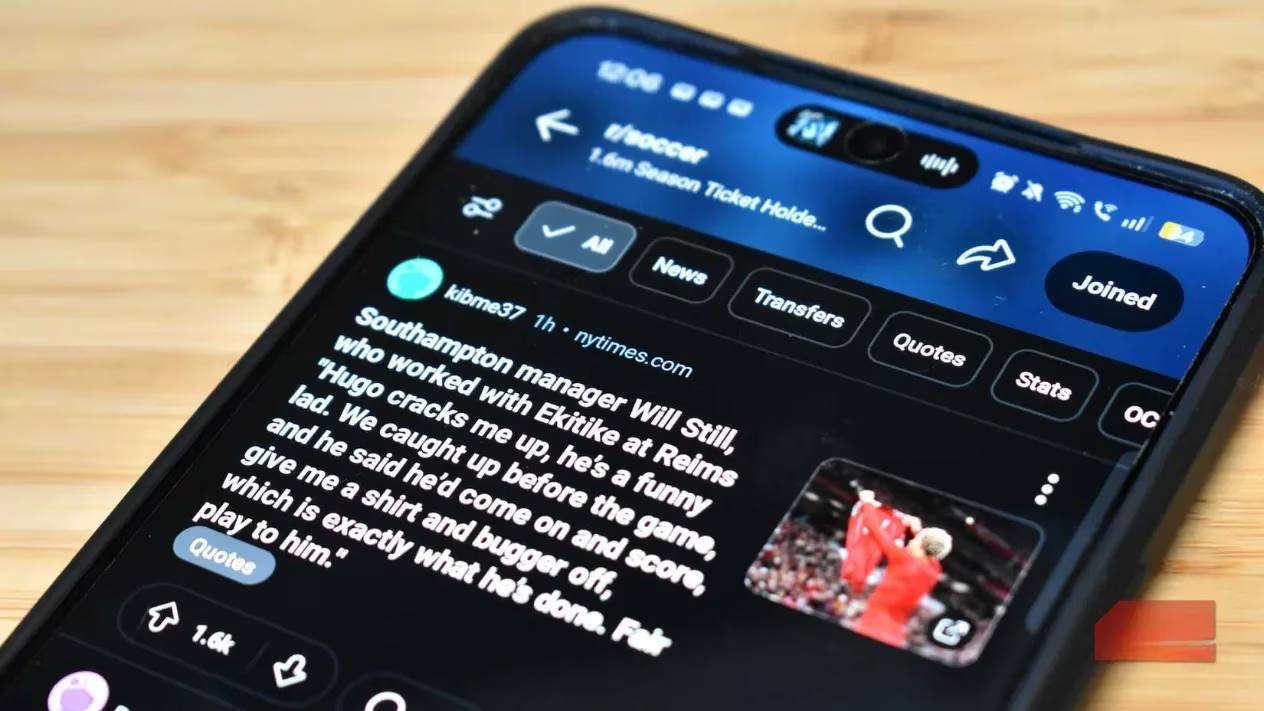
Psychological research in 2025 and 2026 has further clarified why we fall into the scroll hole so effortlessly. It is not a mere lack of willpower; app developers have engineered systems that exploit fundamental cognitive loops. The most significant drivers include:
-
Micro‑escapism: A rapid, low‑friction way to flee from boredom or mild anxiety—especially useful during load screens or matchmaking waits.
-
Instant dopamine spikes: Each swipe that reveals a funny meme, a controversial thread, or a friend’s update delivers a small burst of reward.
-
Social validation: Notifications and upvotes trigger a longing for connection, making the phone feel like a social lifeline even when we are not actively communicating.
-
Dark patterns: Endless feeds, auto‑play, and hidden friction points keep users locked in, sometimes convincing them that passive scrolling is a productive activity.
These mechanisms are identical to those found in modern game loops, which is why many gamers feel a strong pull. Could the solution be as radical as removing the visual cue that starts the cycle? Several Android enthusiasts think so, and a growing movement in 2026 is turning to minimalist launchers to interrupt the habit before it forms.
One of the most talked‑about tools in this space is Before Launcher. It has steadily gained traction since its early versions and now offers a mature, lightweight experience designed explicitly to defuse the attention‑grabbing tactics of default home screens. When a user first installs it on a device like the Realme GT7 or a dedicated gaming phone, the contrast is stark.
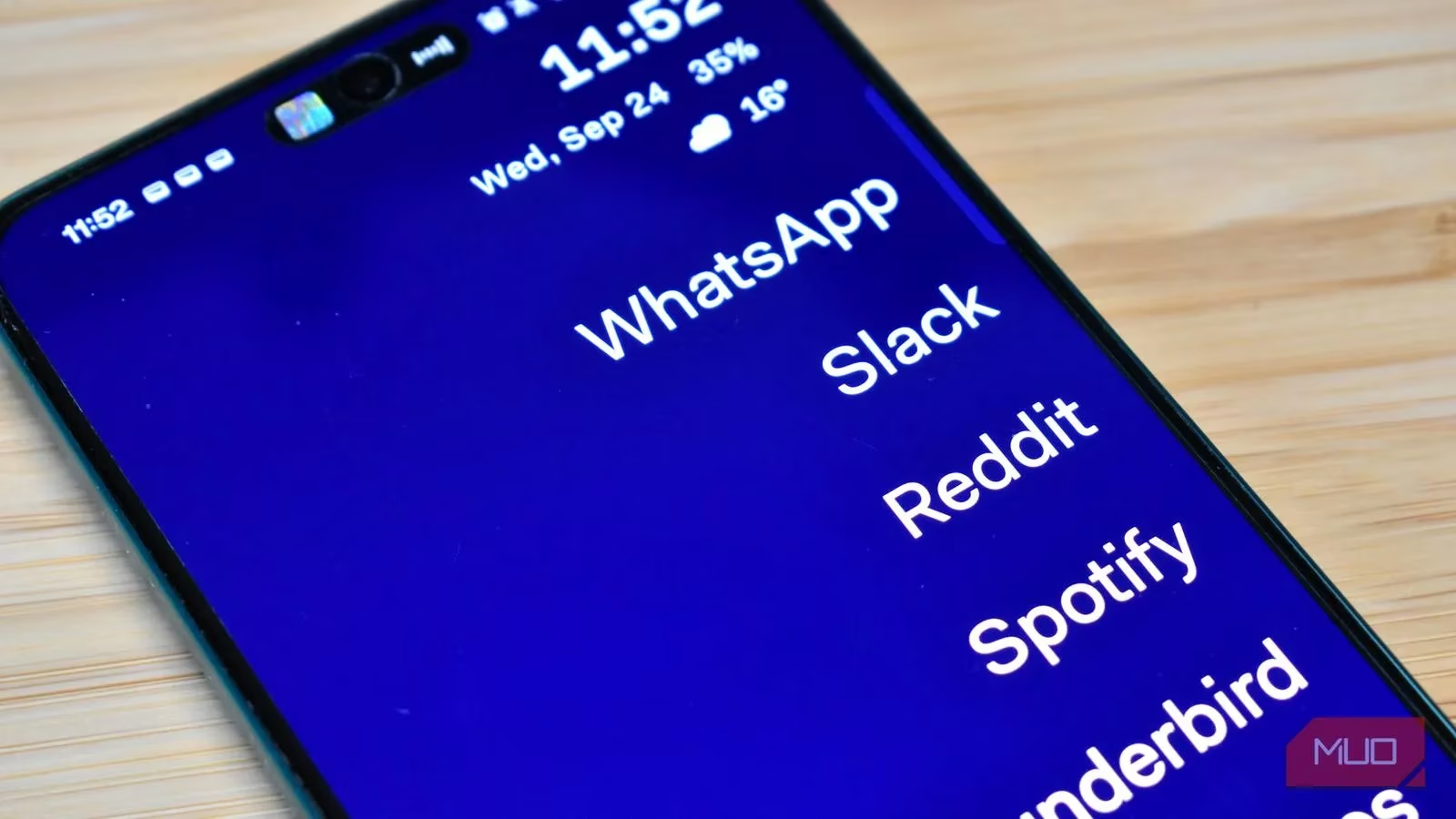
Instead of glowing icons, animated banners, and algorithmic folders, the launcher presents a clean text‑based menu. The weather appears plainly at the top, and beneath it sits a list of application names in a subdued typeface—no thumbnails, no blinking badges, no curated news cards. This deceptively simple shift severs the first engagement point that modern smartphones rely on. Without visual triggers, the brain loses the immediate impulse to open an app and start consuming.
The experience does not stop at aesthetics. Users can integrate a digital health widget that displays daily unlock counts, turning passive awareness into a gentle nudge. Notifications are blocked by default unless explicitly enabled, which forces a conscious decision about what truly requires interruption. Many adopt a rule of keeping the phone face‑down on a desk or using only desktop messengers like WhatsApp Web to chat, leaving the handset as a secondary device rather than a primary distraction.
Even the quick‑switch apps have been repurposed. In one notable case, a user reported replacing their frequently used gaming shortcuts with mundane tools—Contacts, Camera, Messages—effectively turning a potential launcher into a utility belt. This combination of minimalist launcher and redesigned quick‑access menu created a noticeable drop in daily screen time, from roughly three to four hours down to about two hours. Reddit remained on the home screen, but the toxic habit of opening it reflexively was broken because there was no colorful thumbnail to trigger the urge.
What does this mean for gamers heading into the second half of the 2020s? For many, mobile gaming is not the problem; it is the ambient scrolling that fills the gaps between sessions. A minimalist launcher does not banish games or social media—it simply strips away the manipulative packaging. Users report feeling more intentional when they do open an app, whether it is to check a patch note or reply to a friend. The screen feels less like a casino floor and more like a tool bench.
Critics might argue that rotating back to a feature‑dense launcher is tempting, and indeed, the first weeks require discipline. However, 2026’s digital wellness ecosystem offers complementary tools like strict focus modes and AI‑powered usage interventions that can reinforce the habit. For those willing to experiment, a minimalist launcher like Before Launcher is arguably the most effective first step toward reclaiming agency over screen time—a step that might just make a gamer a better player, and a more present human.