
Obtainium: The Open-Source App Update Tracker That Puts You in Control
In the ever-evolving landscape of Android customization, a persistent challenge for enthusiasts and privacy-conscious users alike has been the cumbersome process of managing sideloaded applications. While the Google Play Store offers convenience, it operates within a walled garden, dictating terms and often lagging behind the rapid release cycles of independent developers. Even F-Droid, a commendable open-source alternative, can sometimes fall behind due to its inherent signing procedures. For those seeking a more direct, autonomous, and immediate connection to the software they use, a novel solution emerged around 2025 that fundamentally changed the game: Obtainium. This isn't a traditional app store; it's a sophisticated, intelligent update tracker that bridges the gap between users and developers' release channels, offering an unprecedented level of control and timeliness.

Obtainium's core philosophy is elegant in its simplicity: go straight to the source. Instead of relying on a centralized repository that repackages and redistributes applications, Obtainium acts as a personal agent, fetching updates directly from the developer's chosen distribution point. Whether an application is hosted on GitHub, GitLab, the official F-Droid repository, or a developer's self-hosted website, Obtainium can monitor it. The moment a new release is published on these platforms, Obtainium can detect it and deliver the update notification—or even the APK file itself—directly to the user's device, bypassing any intermediary delays.
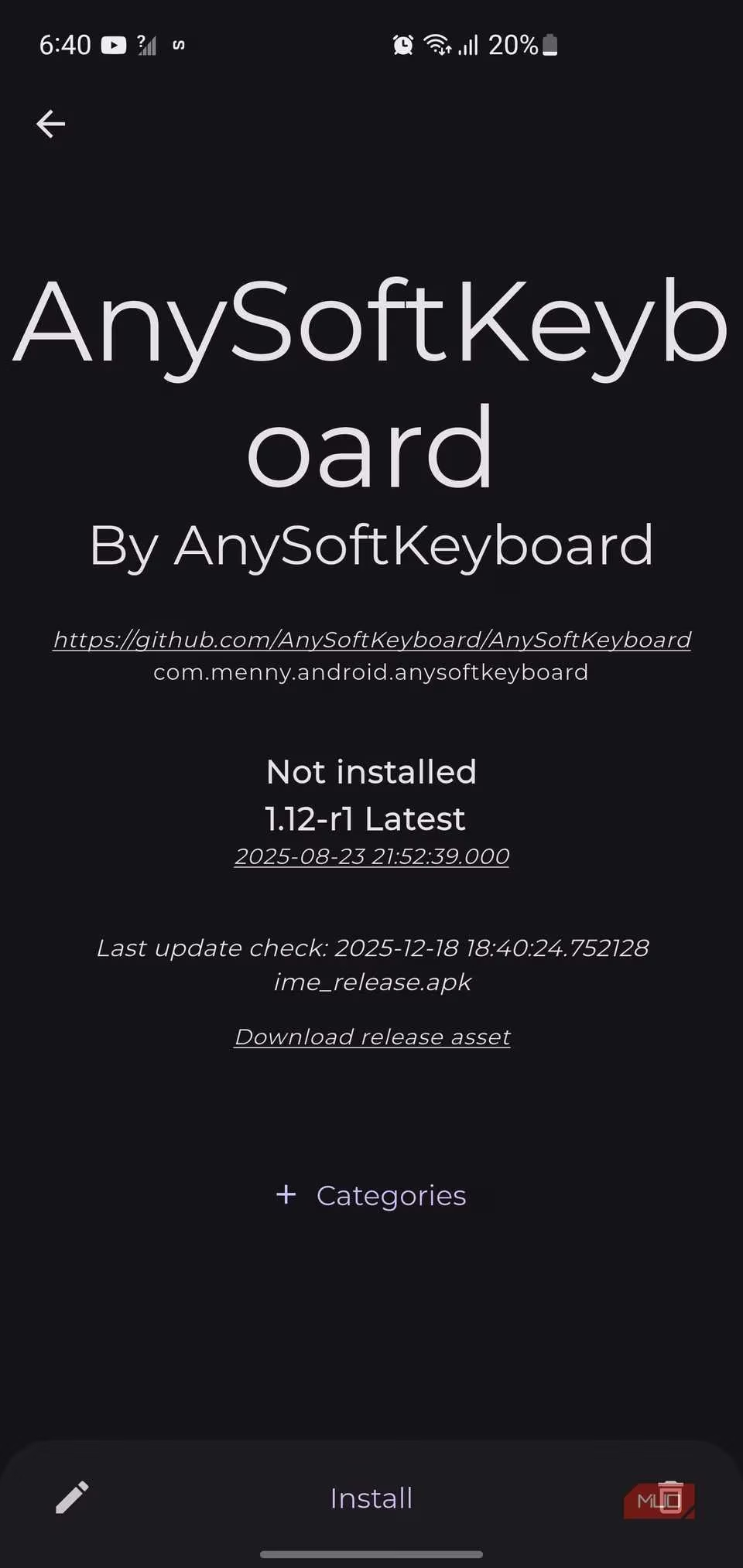
The process of adding an application is intuitive. Users navigate to the "Add app" screen and simply paste the source URL. 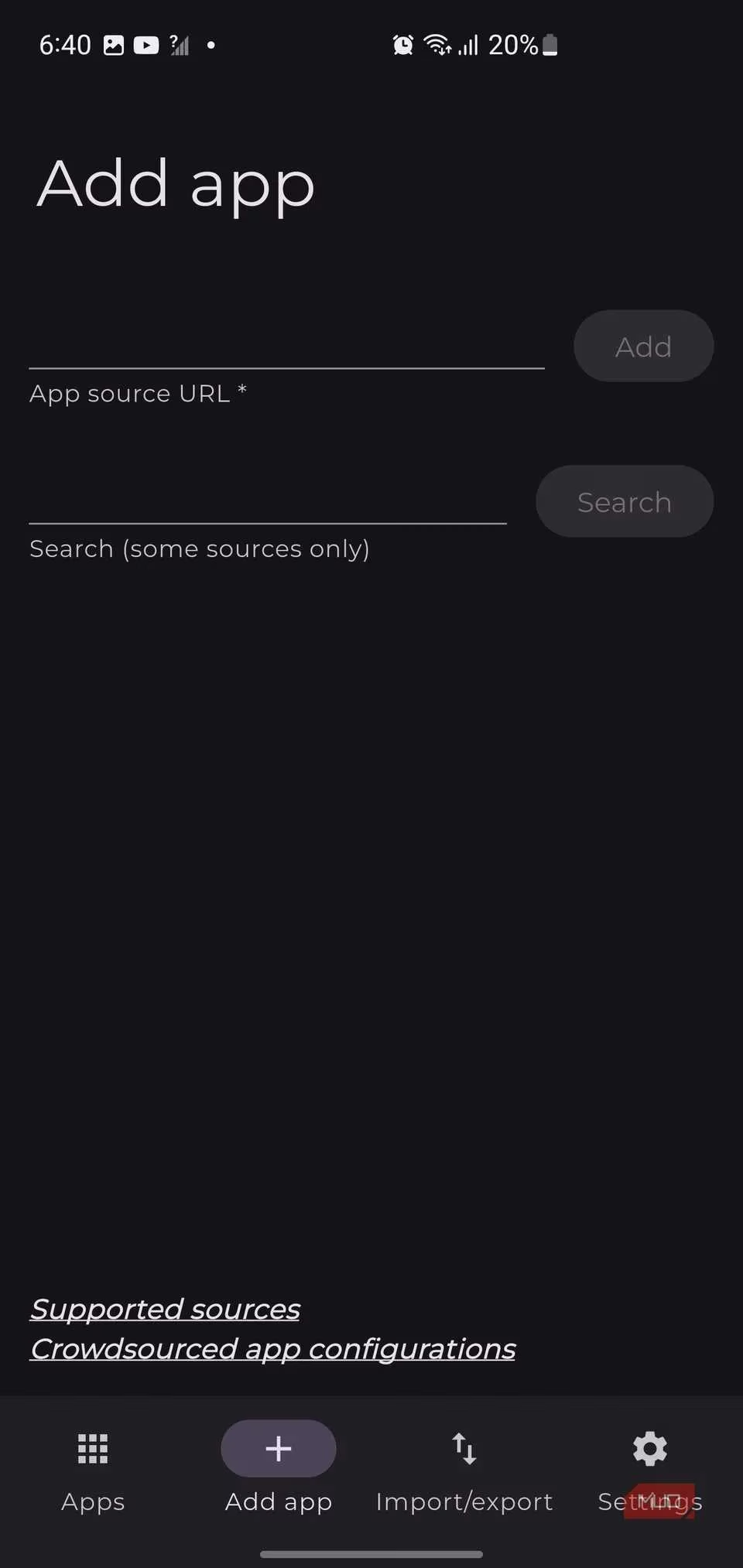 The application then performs a sophisticated interrogation of the provided repository or webpage. It extracts crucial metadata such as version numbers, package identifiers, release notes, and available download links. The result is a clean, informative details page that shows the app's current status—whether it's already installed on the device, the latest available version, and the timestamp of the last update check. From this screen, users can initiate downloads and installations with a single tap.
  A successful installation is clearly confirmed, providing peace of mind.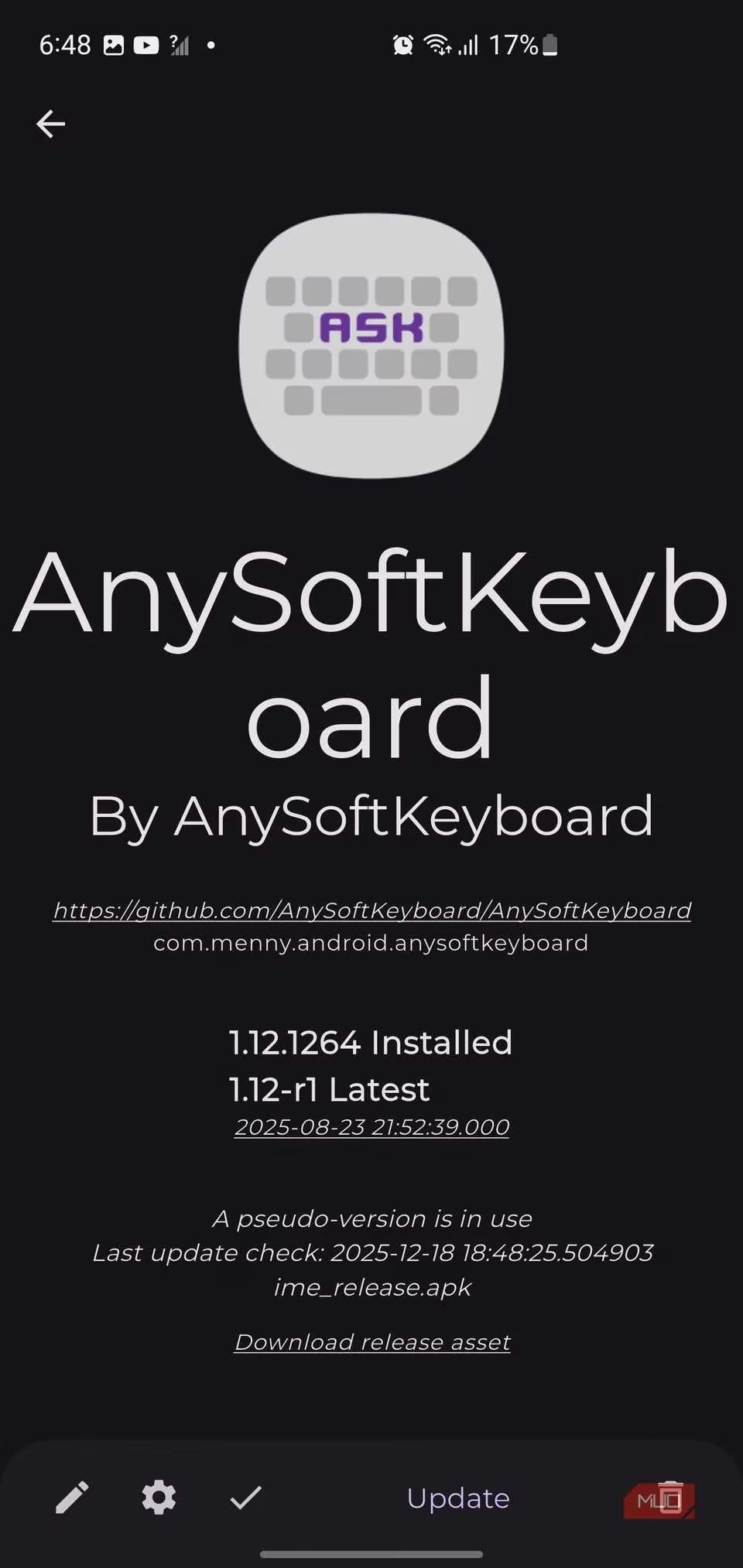
For power users managing a large collection of sideloaded apps, the import and export functionality is a godsend. Manually adding dozens of sources is a tedious task. Obtainium's Import/Export section elegantly solves this. Users can bulk-import their entire app list from various sources:
-
A simple text file containing a list of URLs.
-
An OPML backup file (a common format for exporting lists).
-
Directly from their starred repositories on GitHub.
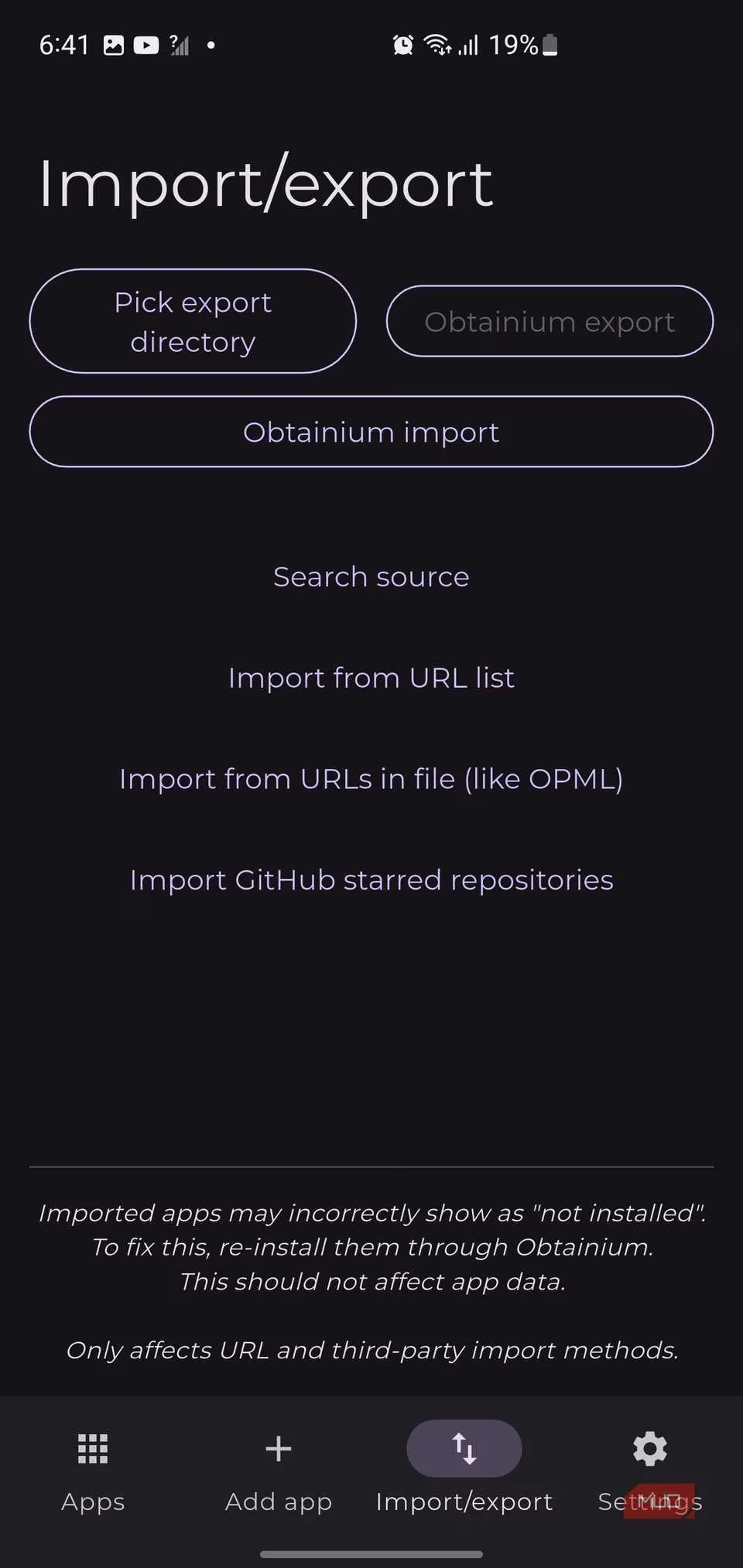
This feature seamlessly bridges the gap between desktop discovery and mobile installation. A user can star interesting projects on GitHub during their desktop browsing session, and those projects will be ready and waiting in Obtainium on their phone. Exporting works just as smoothly, allowing for easy backups, migration to a new device, or sharing a curated list of open-source gems with fellow enthusiasts.
Of course, with great power comes great responsibility. Using Obtainium requires enabling installation from "Unknown Sources" for the app itself, a standard step for any sideloading workflow. More importantly, the onus is on the user to vet the sources they add. This aligns with the best practices of the open-source community—knowing where your software comes from is a cornerstone of security and trust. For those already accustomed to sideloading, these are familiar and non-intrusive steps.
Where Obtainium truly shines and differentiates itself from monolithic app stores is in the granular, almost surgical level of control it grants over the update process. Traditional stores typically offer a binary choice: update to the latest "stable" version or don't. Obtainium assumes its users are informed and want precision.
When configuring a source, the options are extensive:
-
Version Tracking: Choose to track only stable releases, or include pre-release, beta, and even alpha versions for early access.
-
Rollback Capability: If a new update causes instability or performance degradation, users can easily roll back to a previous, known-good version directly from the app's history.
-
Advanced Filtering: Use regular expressions to filter release titles, ensuring you only see updates that match specific naming patterns or exclude certain build types.
-
Architecture Filtering: Automatically filter APK downloads to match your device's CPU architecture (e.g., arm64-v8a), preventing installation of incompatible binaries.
-
Version Reconciliation: Align the version numbers parsed from the source with what Android reports, ensuring clarity.
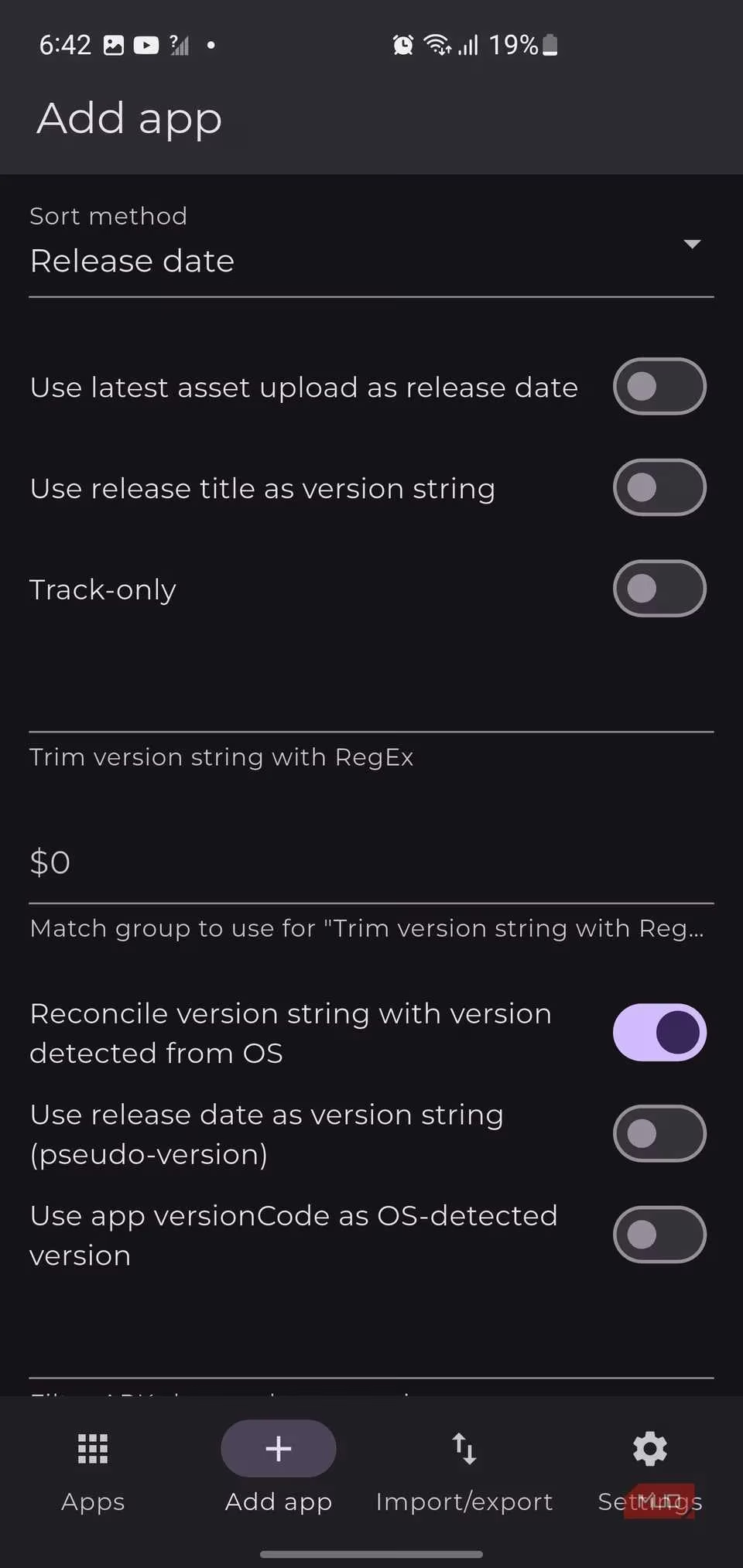
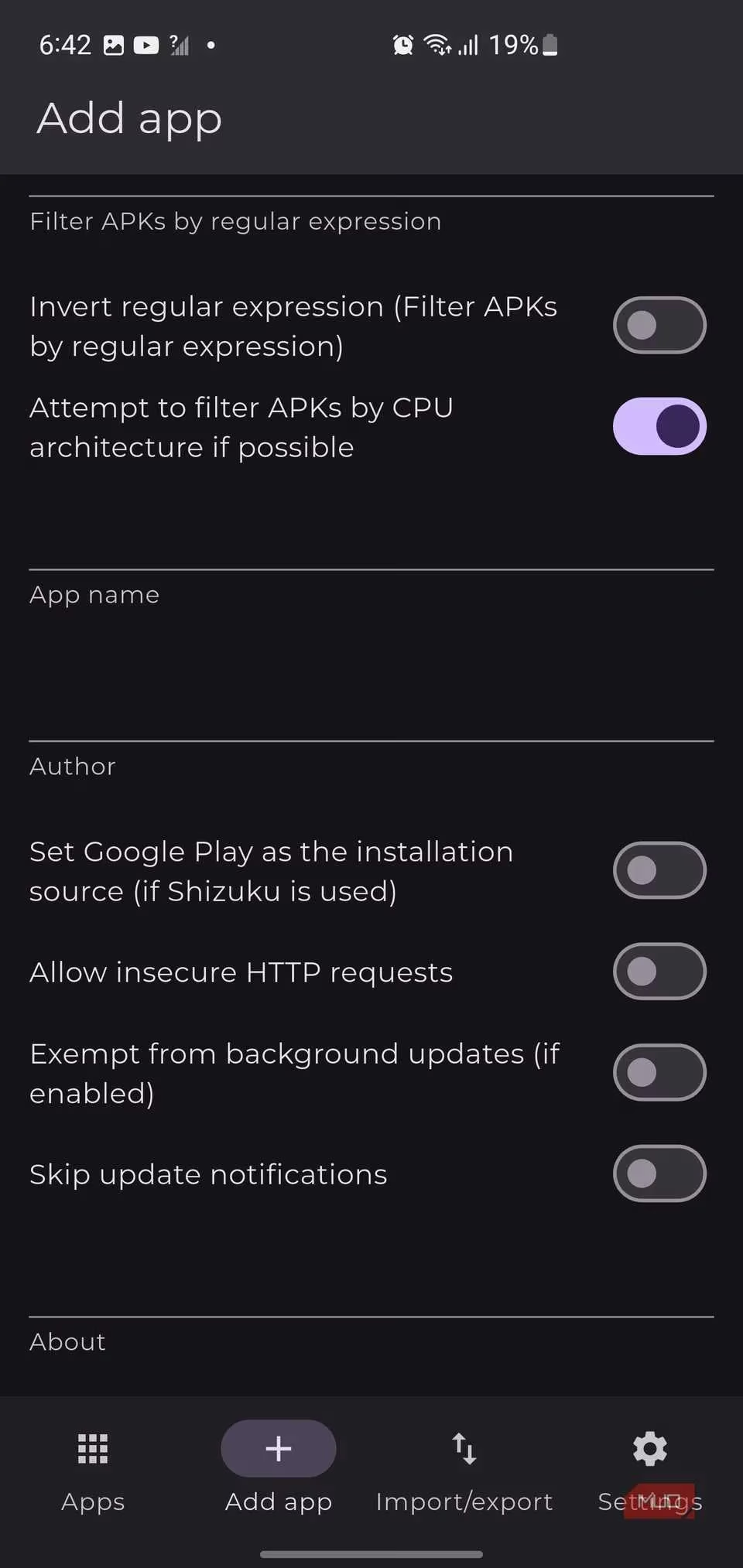
A particularly clever feature is the "Track-only" mode. This allows Obtainium to monitor an app for updates and send notifications, but it won't automatically download the APK. This is perfect for applications you might update through another channel (like F-Droid) or prefer to manually review before installation, giving you complete autonomy over your device's software ecosystem.
The settings menu in Obtainium is a treasure trove for optimizers. While the app works perfectly out of the box, delving into the settings can tailor the experience to individual needs and device constraints.
| Setting Category | Key Options | Benefit |
|---|---|---|
| Update Checks | Adjust background interval (default 6 hrs), disable on mobile data, disable while not charging. | Saves battery life and data usage. |
| Installation | Integrate with Shizuku/Sui for privileged installs, use AppVerifier for pre-install checks. | Enhances security and installation capabilities. |
| Notifications | Customize for new updates, completed downloads, and errors. | Reduces notification clutter. |
| Appearance | Pure black OLED theme, Material You dynamic theming, custom accent colors, app grouping. | Personalizes the interface for visual comfort and organization. |
Advanced users can configure GitHub personal access tokens to avoid API rate limits, or route all network requests through a proxy for enhanced privacy. There's even an option to automatically remove apps from Obtainium's tracking list if they are uninstalled outside the app, ensuring the list always reflects the device's true state.
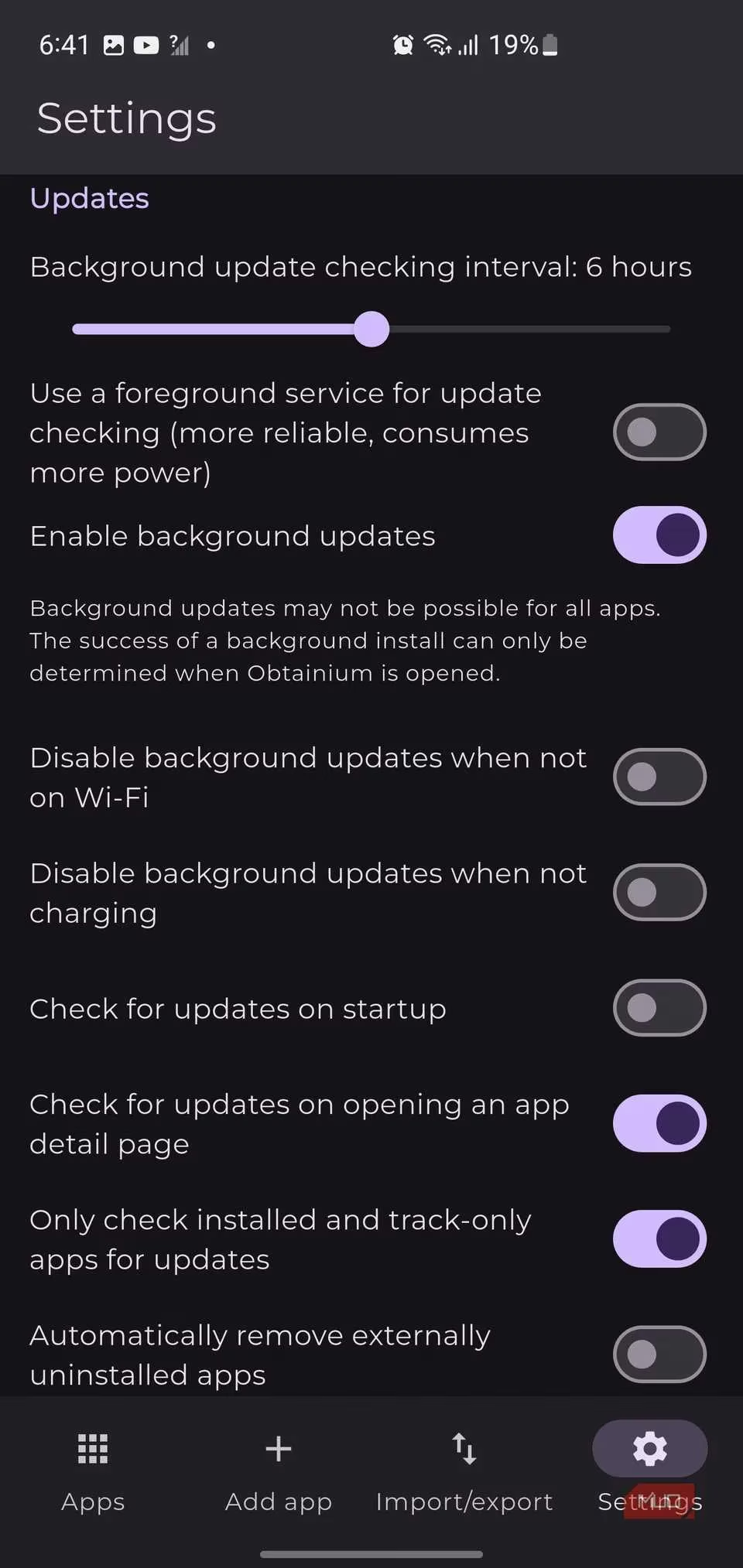
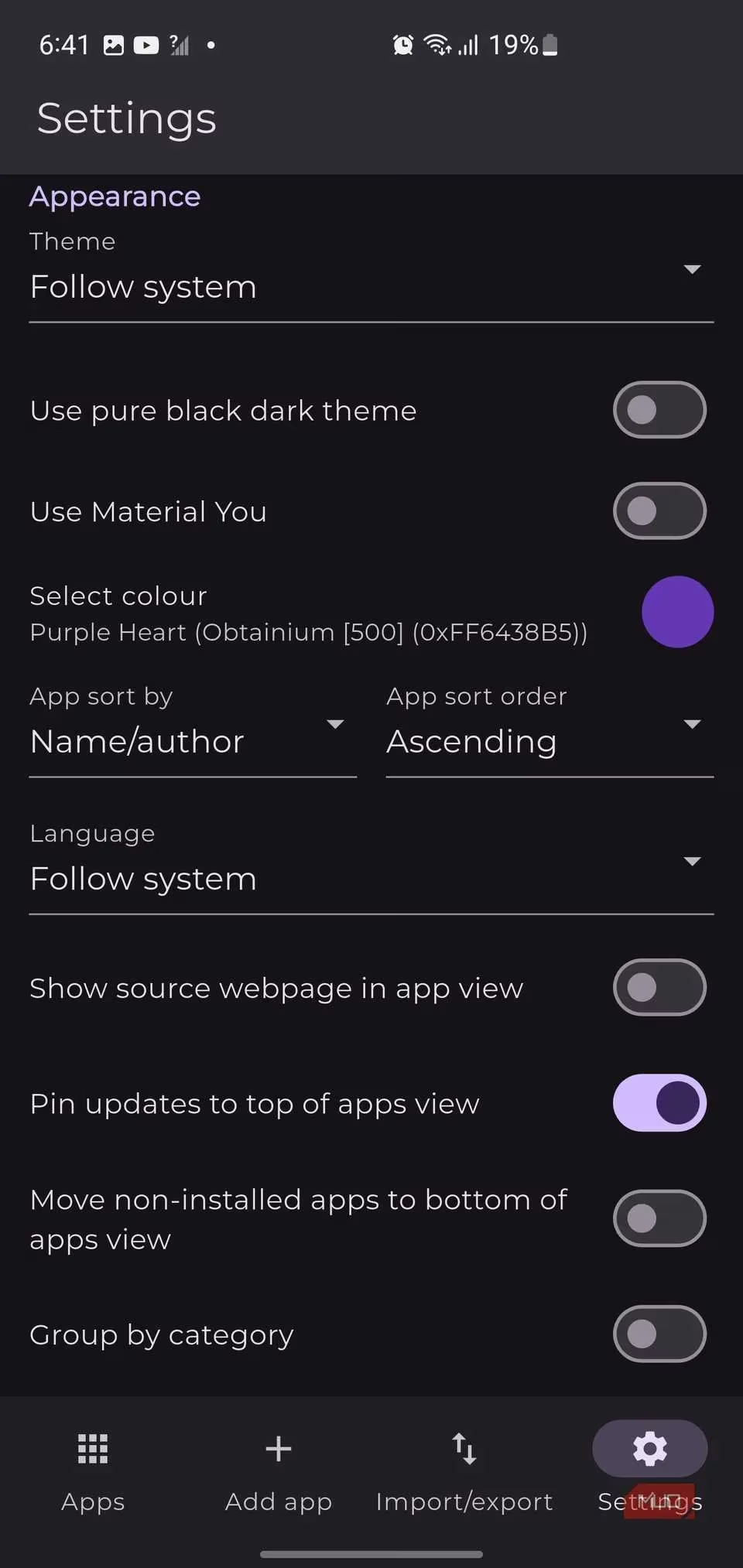
By 2026, Obtainium has cemented its place as an indispensable tool for a specific but growing segment of the Android community. It caters to:
-
Open-source advocates who want immediate updates straight from the developer.
-
Privacy-conscious individuals minimizing reliance on large tech conglomerates.
-
Power users and tinkerers who need fine-grained control over their software versions.
-
Developers who want to test their own pre-release builds across devices seamlessly.
For anyone who has ever felt frustrated by the sluggish, opaque update mechanisms of conventional app stores, or for regular users of open-source software who value direct lines to project maintainers, Obtainium is more than just a utility—it's a paradigm shift. It empowers users, fosters a closer connection to the development process, and wraps this powerful functionality in a clean, thoughtful, and highly configurable interface. In a digital environment often characterized by gatekeepers and delays, Obtainium stands as a testament to the efficiency and empowerment possible when software is designed to serve the user first.