
Samsung Digital Wellbeing Exposes a 7-Hour Screen Habit and Offers a Fix
A Samsung phone user opened Digital Wellbeing expecting little more than a daily screen-time total. Instead, the dashboard delivered a blunt audit of modern smartphone life: dozens of unlocks, more than 100 notifications in a single day, and weekly screen time that sometimes climbed past seven hours. In 2026, as handsets become more capable and more persistent in asking for attention, that experience remains a useful case study in how built-in tools can turn vague guilt into measurable change.
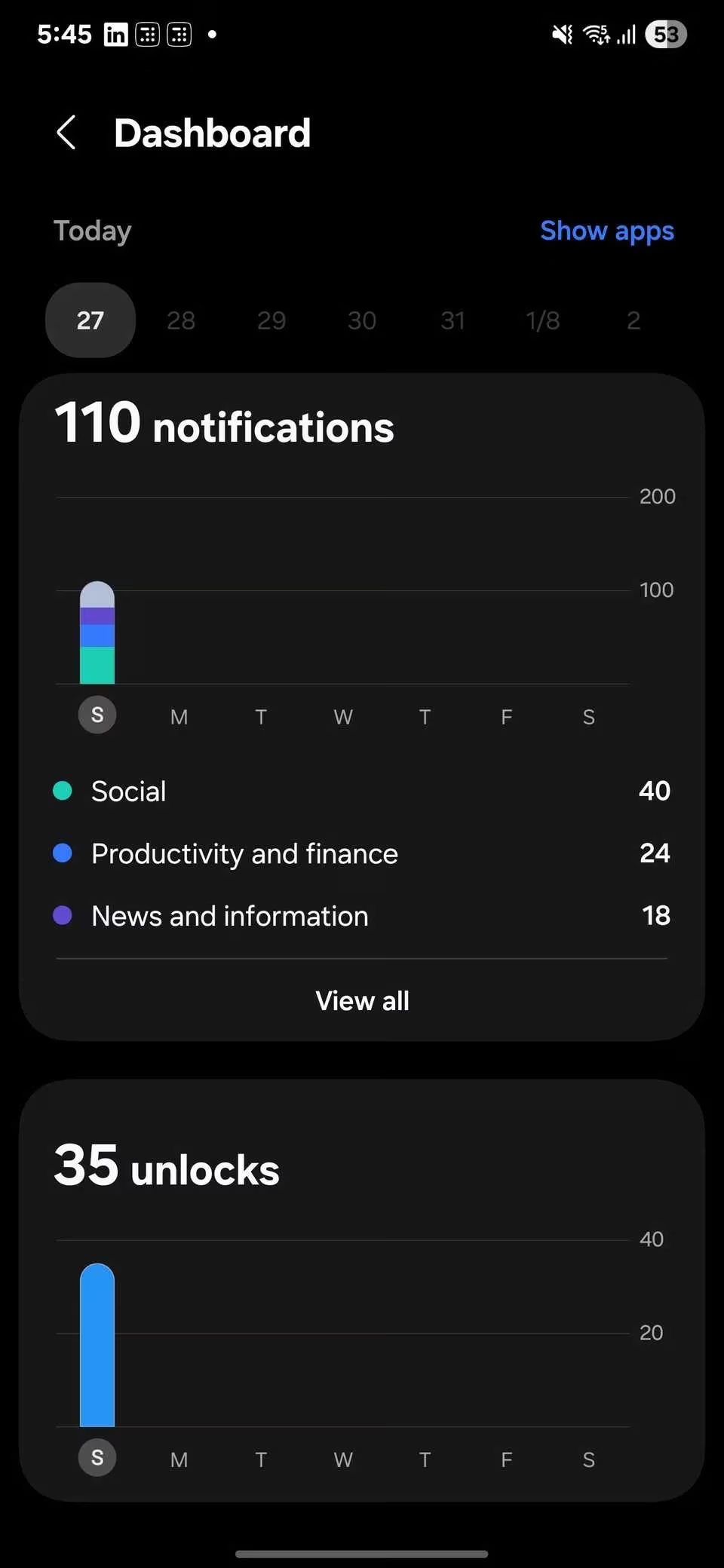
The first surprise was not the hours but the mechanics. The dashboard showed which apps consumed the most time, how often the phone was unlocked, and how many alerts arrived. One day brought 229 notifications, mostly from messaging and shopping apps. The unlock count suggested the phone was being checked roughly every 10 minutes. Social media and video apps sat at the top of the usage list, and the category view marked nearly all screen time as Social or Entertainment.
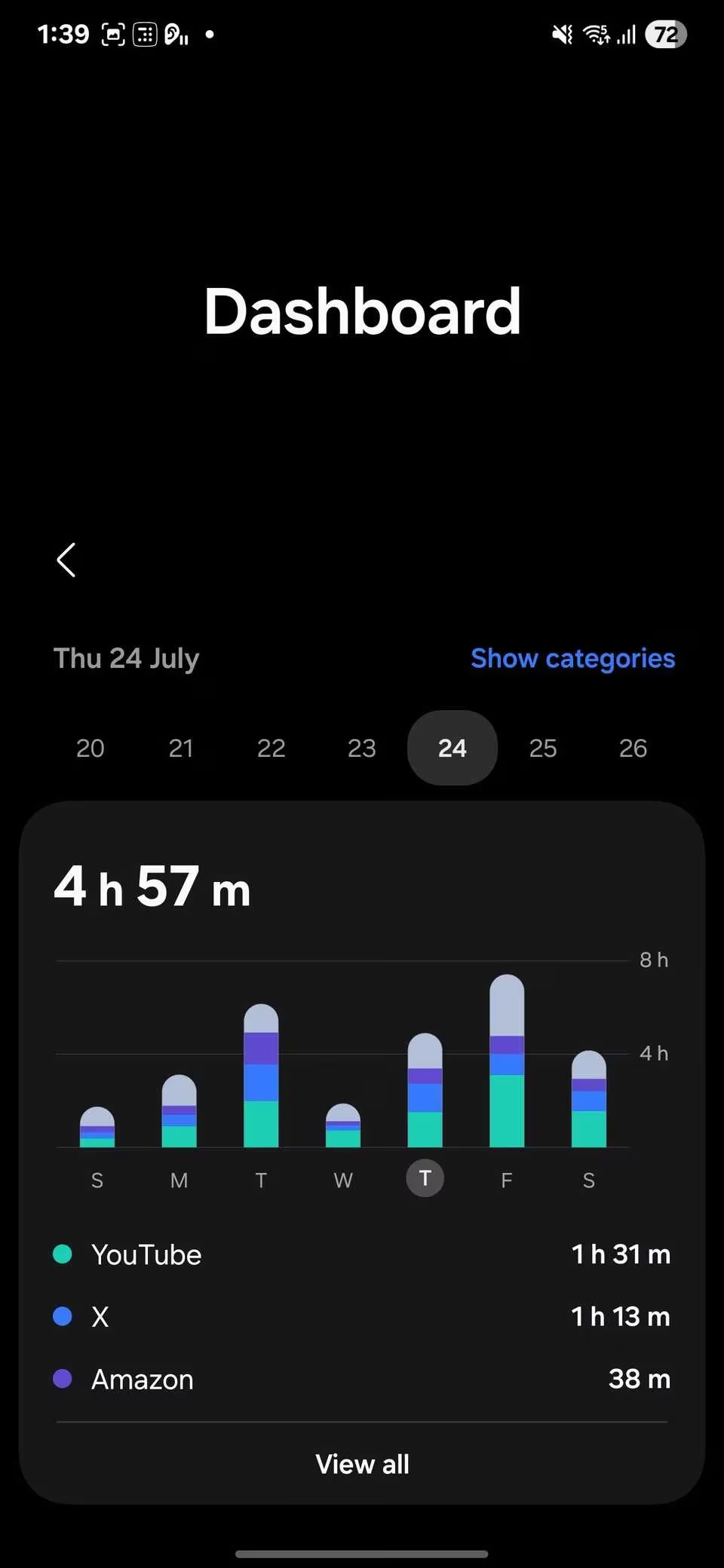
The weekly report made the pattern harder to dismiss. It showed the daily average, highlighted peak usage hours, and flagged the most screen-heavy days. The user was on the phone past 2 AM almost every night. That explained the morning fatigue. It was not one bad day but a routine. The phone had become a default escape, a reflex reached for in idle moments. The user often could not remember what had filled those hours.
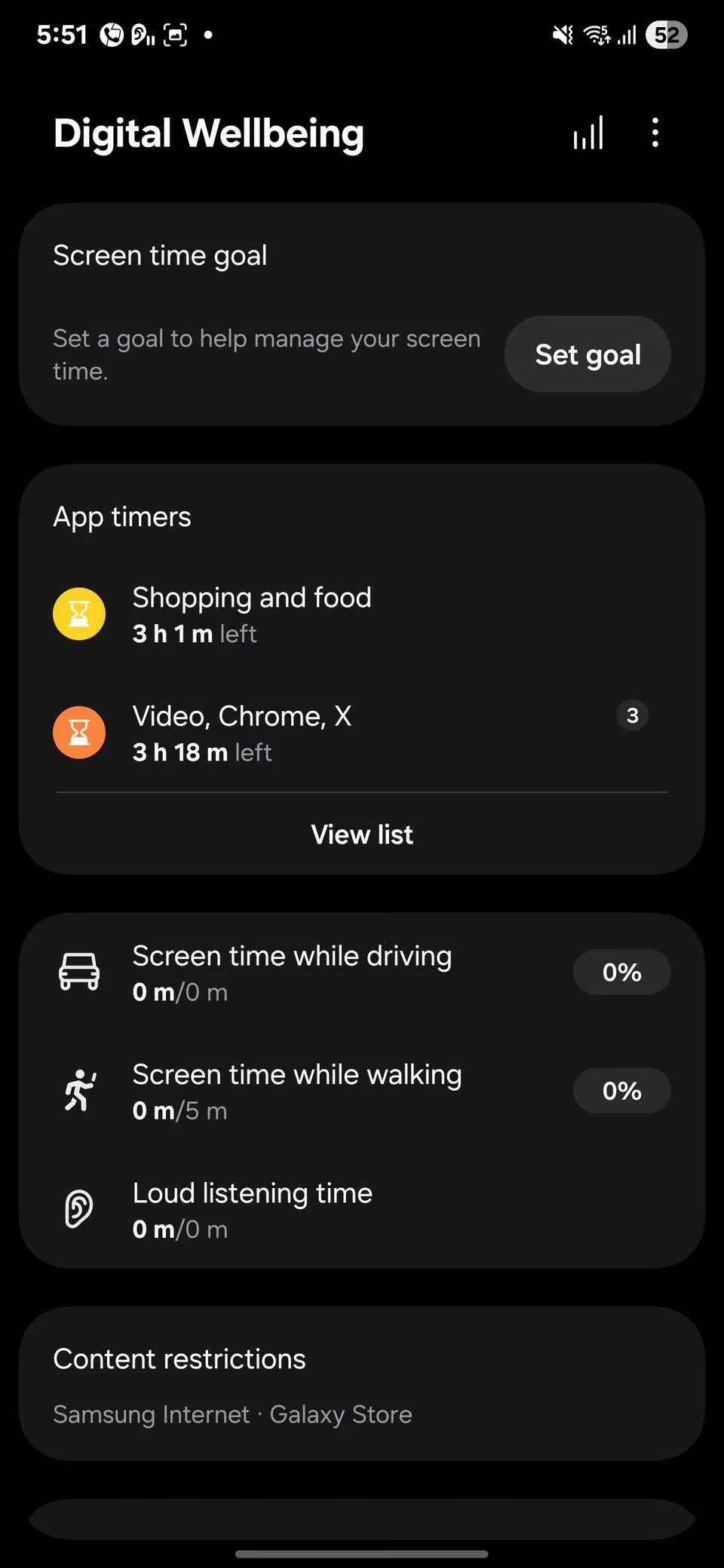
The response was practical rather than dramatic. The user set a screen-time goal of under three hours per day. Digital Wellbeing tracks the goal with a progress circle on the dashboard. If the circle reached 75% by midday, that was a signal to slow down. The visual cue made habitual app openings easier to interrupt. It was one of the simplest ways to limit screen time without removing useful services.
App Timers came next. The user targeted the biggest distractions and assigned strict caps: 30 minutes for X and one hour for YouTube. Once the limit was reached, the app icon grayed out and stayed locked until the next day. The first few days were frustrating. Reflexive taps met a reminder that the day's allowance was gone. But the friction worked. Over time, the user stopped picking up the phone just to fill idle moments and began to appreciate quiet, uninterrupted time again.
| Tool | Setting | Effect |
|---|---|---|
| Screen-time goal | Under three hours per day | Made daily usage visible with a progress circle |
| App Timers | 30 minutes for X, one hour for YouTube | Added hard stops to the most distracting apps |
| Focus Mode | One-tap pause for distracting apps | Protected work, reading, and presence |
| Bedtime Mode | 11 PM grayscale and silenced notifications | Reduced late-night temptation and improved sleep |
Focus Mode became a favorite. With a single tap, it pauses distracting apps so the user can work, read, or simply be present. Social media, games, and other attention-grabbing apps go silent. If one is opened out of habit, the phone gently reminds the user that it is paused. The change was small but effective. It gave structure to periods that had previously been porous.
At night, Bedtime Mode took over. Every evening at 11, the phone turned grayscale and silenced notifications. The colors faded, the buzz disappeared, and the device felt less tempting. That subtle shift helped the user fall asleep faster. It also reinforced a boundary that notifications had been eroding.
The user kept checking the weekly report to see how things changed. The report showed average screen time, the apps still leaned on, and the times of day when usage peaked. Watching the trend move downward was encouraging. The goal was not a perfect number. It was progress. Over time, the user stopped checking the phone first thing in the morning. The reflex to reach for it during every spare second weakened. Without forcing a full detox, the user spent less time on the phone and filled small gaps with real things again: stretching, walking, talking, reading, or simply thinking.
The case is a reminder that measurement alone rarely changes behavior. The dashboard created awareness, but the boundaries did the work. Screen-time goals, app timers, Focus Mode, and Bedtime Mode turned insight into friction. In 2026, that combination may be more valuable than another app. The controls were already on the phone. The user just had to use them.