
Switching to Android in 2026: Where Apps Go to Die
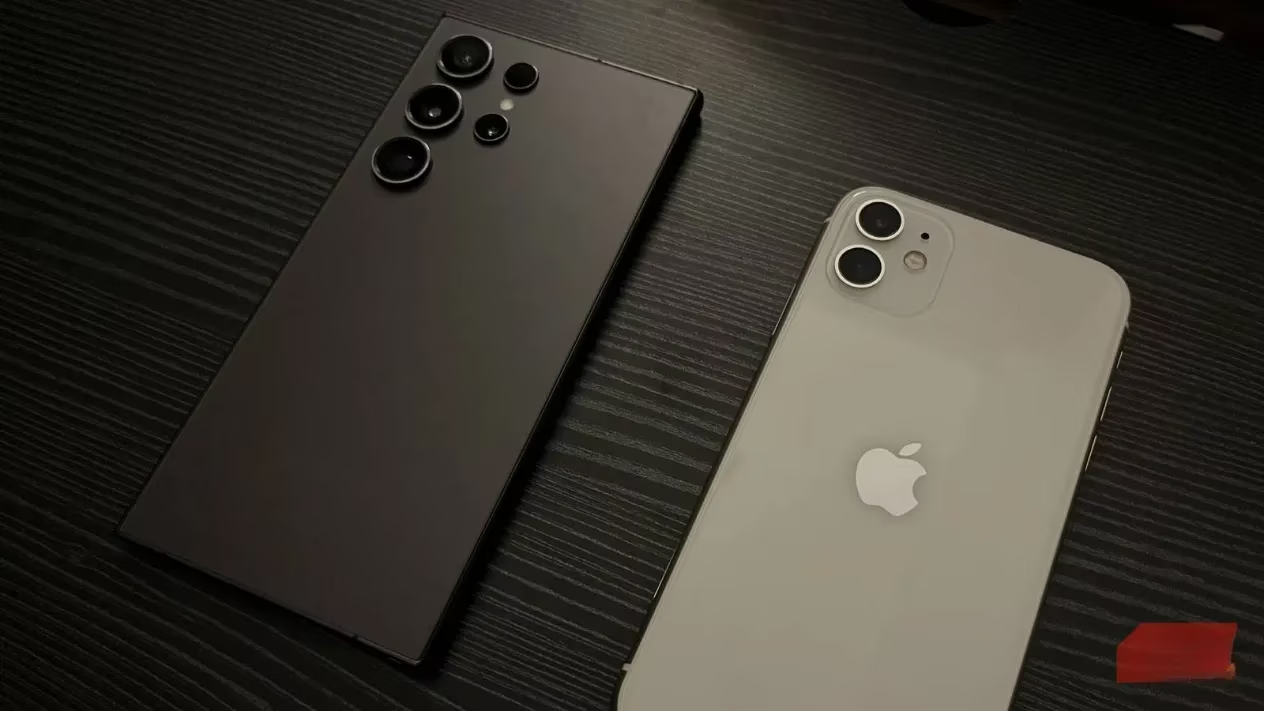
In the grand theater of smartphone loyalty, few acts are as tragicomically predictable as the iPhone user who decides to "broaden their horizons" with an Android flagship. Our brave protagonist—let's call him Bob—traded his trusty iPhone 13 for a shiny Samsung Galaxy S24 Ultra, lured by promises of superior camera hardware and endless customization. Spoiler alert: the hardware delivered, but the apps? Oh, the apps. 🤦♂️
Bob quickly discovered that the Play Store's "existence" of an app is a far cry from "functional parity." Social media, music, messaging, gaming—each category had its own special circle of hell. And no, this isn't a 2015 rant; it's 2026, and somehow the gap persists.
Instagram: The Camera That Wasn't 📸
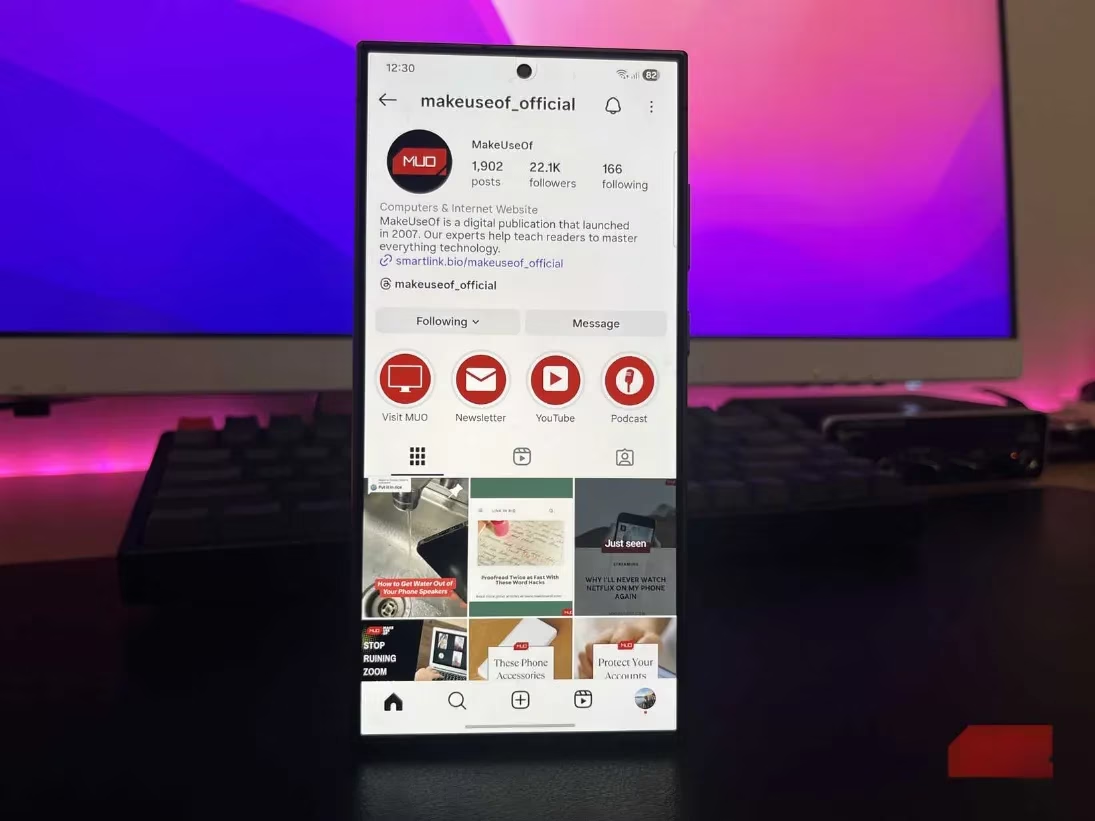
Clicking and sharing pictures is the lifeblood of any social media app. So when Bob fired up Instagram on his new Galaxy S24 Ultra, he expected magic. Instead, he got a shutter delay that made him feel like he was waiting for a 1990s dial-up connection to load. Five seconds of holding perfectly still—in broad daylight—just to register a tap? That's not a feature; that's a hostage situation.
And the resulting photos? They looked like they were taken through a foggy window compared to the stock camera app. Sure, Bob could use the native camera and then manually upload, but who has time for that when you're trying to send a quick selfie to your group chat? The in-app camera is, to put it politely, a digital potato.
Spotify: The Equalizer That Ghosted 🎵
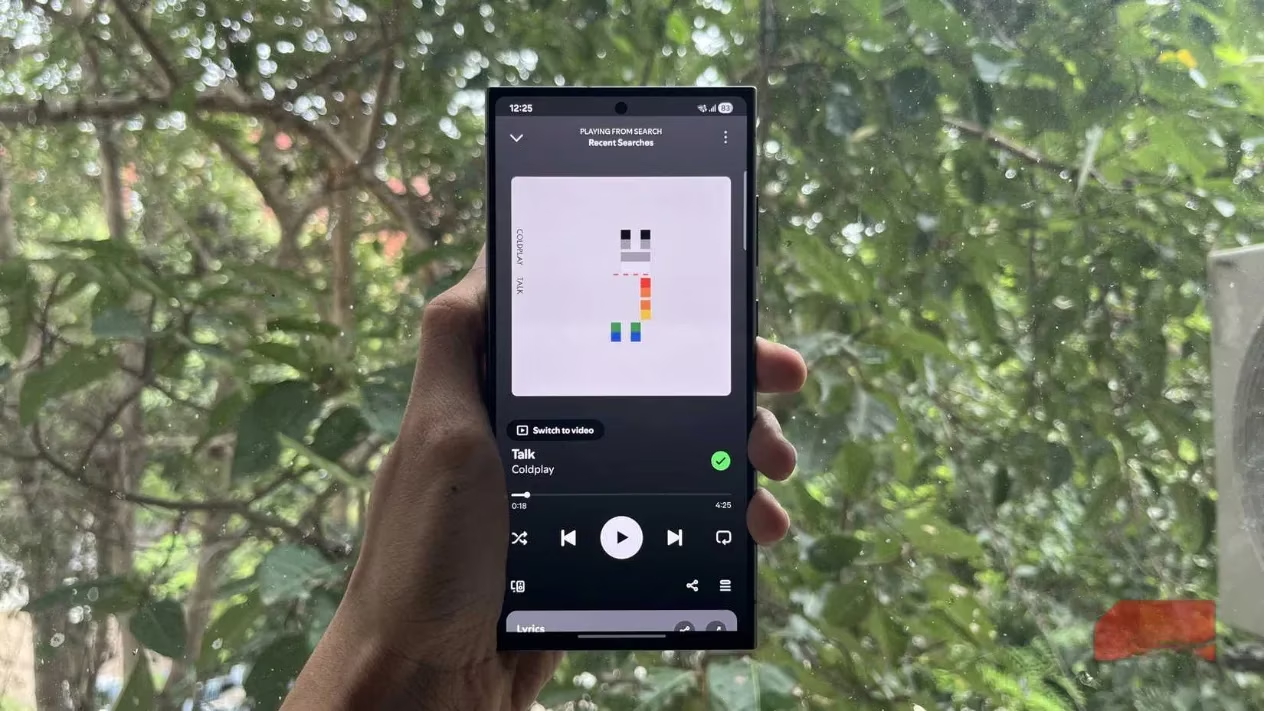
Bob's musical journey wasn't any smoother. He had been a loyal Spotify user on iOS, but on Android, the app felt like it was built by an intern who had never seen a smartphone. The equalizer? Oh, it exists—but on Samsung devices, it just redirects you to the system audio settings. That means your carefully curated bass boost applies to every app, including your alarm clock. Want a custom EQ just for Spotify? Too bad.
On other Android brands like Realme, Honor, and Nothing, the behavior was a mixed bag—some worked like iOS, some didn't work at all. Bob eventually threw in the towel and switched to Apple Music. Yes, you read that right: an Android user voluntarily using Apple Music. The horror.
WhatsApp: Dark Mode? More Like Dim Mode 🌚
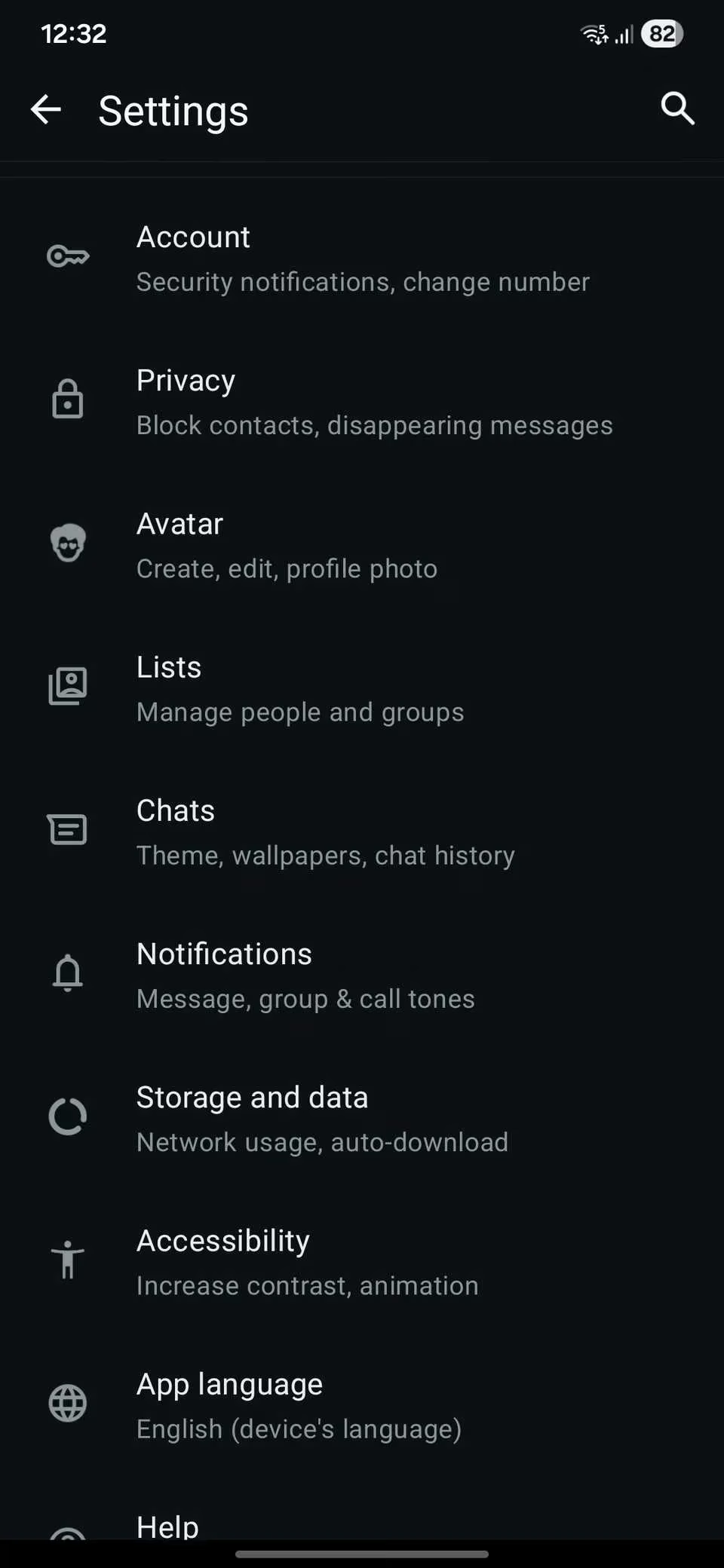
With iMessage out of the picture, Bob turned to WhatsApp. On iOS, it was polished, coherent, and followed Apple's design language. On Android, it felt like a half-baked clone assembled by a committee of distracted squirrels.
The dark mode is a joke: instead of true blacks that make OLED screens sing, you get a murky green-tinted background that looks like a swamp at midnight. The menus are a chaotic jumble—half the time Bob found himself scrolling endlessly to find a basic setting. And the gestures? On iOS, a long-press previews a chat, a swipe reveals read receipts. On Android, you need to long-press, tap three dots, and then choose another option. It's like the app is actively punishing you for not having an iPhone.
Gaming: Where Android Takes a Knee 🎮
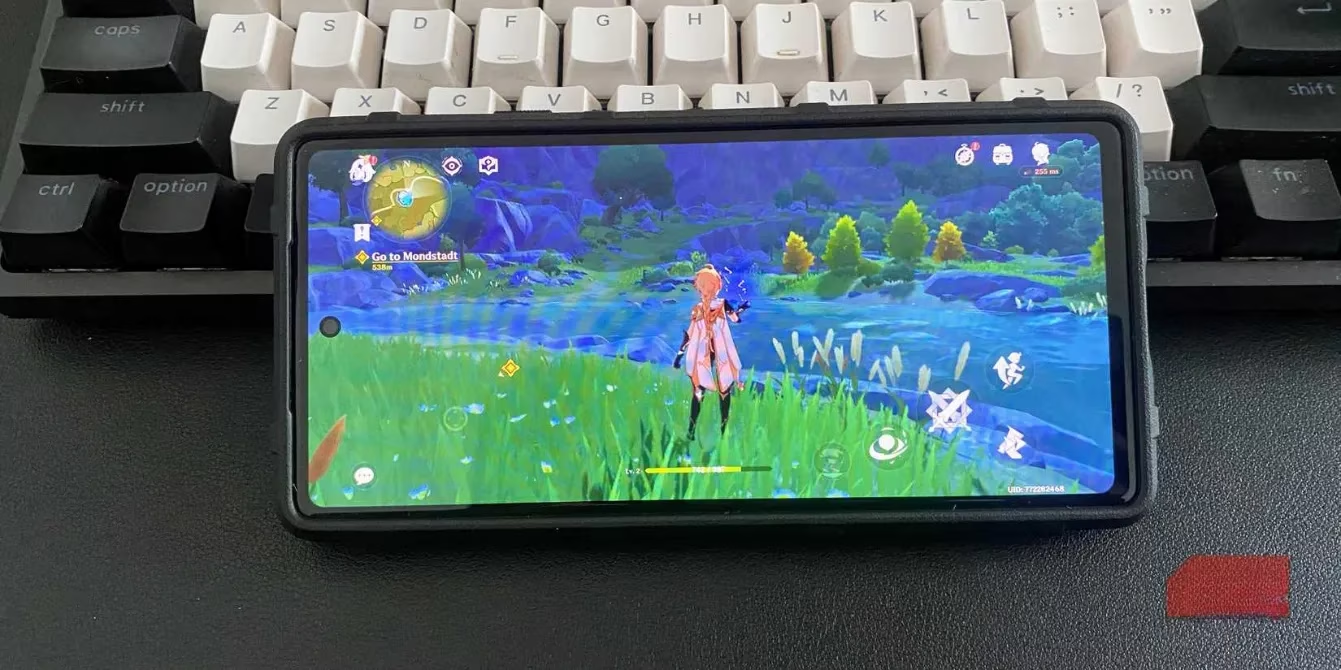
Bob likes to game on his phone. Genshin Impact, for instance. On iOS, it ran at a respectable resolution with stable frames. On Android? Lower resolution, constant frame drops, and still no 120 FPS support that iPhones have enjoyed for ages. Controller support only arrived recently, despite Android supporting controllers for over a decade. It's as if developers treat Android as an afterthought—a place where optimization goes to die.
To be fair, if you're a hardcore mobile gamer, an ROG Phone 9 Pro will outperform an iPhone over long sessions. And for emulation, Android is the undisputed king. But for mainstream titles, the experience is often a compromise.
YouTube: Google's Own Goal 🐛
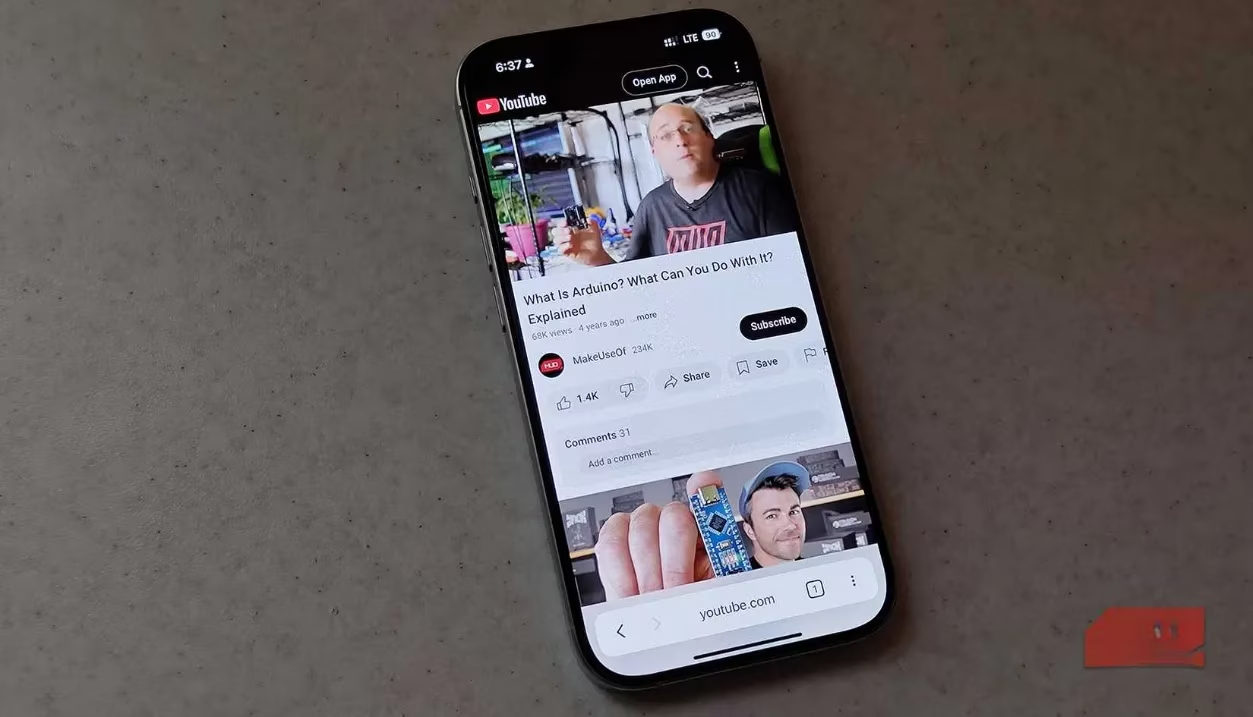
You'd think Google's own apps would work flawlessly on Google's own platform, right? Wrong. Bob found YouTube on Android to be a buggy mess. Videos would open to a black screen while audio played, picture-in-picture would randomly stop working, and tapping controls did nothing. Then there's the Instagram bug where Reels keep playing audio in the background even after quitting the app—only a force close of YouTube fixes it. How does that even happen?
The Verdict: A Tale of Two Platforms 📊
Let's summarize Bob's journey in a handy table:
| App | iOS Experience | Android Experience |
|---|---|---|
| Snappy camera, great quality | Shutter delay, potato photos | |
| Spotify | In-app equalizer, stable | System EQ, crashes, lock screen issues |
| True dark mode, intuitive gestures | Green-tinted dark mode, clunky menus | |
| Genshin Impact | High res, 120 FPS, controller support | Lower res, frame drops, late controller support |
| YouTube | Works as expected | Black screens, PiP nightmares, audio bugs |
So, is Android a terrible platform? Not at all. It has its strengths: customization, emulation, and gaming phones that can outlast an iPhone. But when it comes to everyday apps, the experience often feels like a second-class ticket. Google could fix this by enforcing stricter quality guidelines on the Play Store, but until then, users like Bob are left to either hunt for alternatives or simply grin and bear it.
And so, our hero remains on Android, occasionally shaking his fist at the sky and wondering: why can't app developers just treat both platforms equally? Is that too much to ask in 2026? 🤷♂️