
Top Open Source Android Apps for Privacy & Performance in 2025
Android devices ship with decent pre-installed apps, but they often prioritize convenience over user privacy. These stock applications quietly collect data while offering limited customization options. For the privacy-conscious user in 2025, switching to open-source alternatives isn't just a preference—it's a necessity. These community-driven apps not only respect your digital boundaries but frequently outperform their proprietary counterparts in speed and functionality. Imagine browsing without being tracked, texting without data harvesting, or typing without keyloggers—all while enjoying streamlined interfaces and advanced features. The best part? You can transform your device today without spending a dime.
🔒 Brave Browser: Privacy-First Browsing
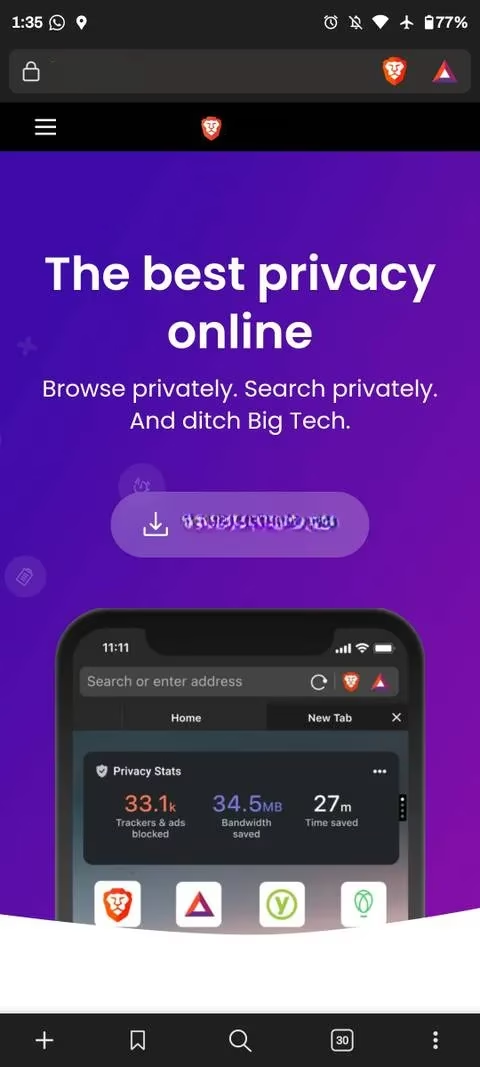
Say goodbye to targeted ads and hello to lightning-fast loading times. Brave isn't just another browser—it's a privacy fortress. Its signature Shields technology automatically blocks ads and invasive trackers across all websites. The mobile version packs even more punch with built-in firewall protection and VPN capabilities (though the VPN requires subscription). What truly sets Brave apart is its revolutionary approach to advertising: users can opt into privacy-respecting ads to earn Basic Attention Tokens (BAT), which can be tipped directly to content creators. Performance-wise, it consistently outperforms Chrome in speed tests—pages load noticeably faster without all that tracking baggage weighing them down.
📱 Simple SMS Messenger: Back-to-Basics Texting
Why let your messaging app scan conversations when you don't have to? Simple SMS Messenger strips texting down to its essentials—no accounts, no ads, no nonsense. Within seconds of installation, it prompts you to set it as your default SMS handler. The minimalist interface hides surprising depth: group messaging, contact blacklists, custom notification vibes, and reliable backup/restore functions. While it lacks RCS support (that's Google's proprietary protocol), it handles MMS flawlessly. For those tired of chat apps mining their conversations, this is digital detox in app form. Short messages, long-term privacy.
⌨️ OpenBoard: Your Keys, Your Rules
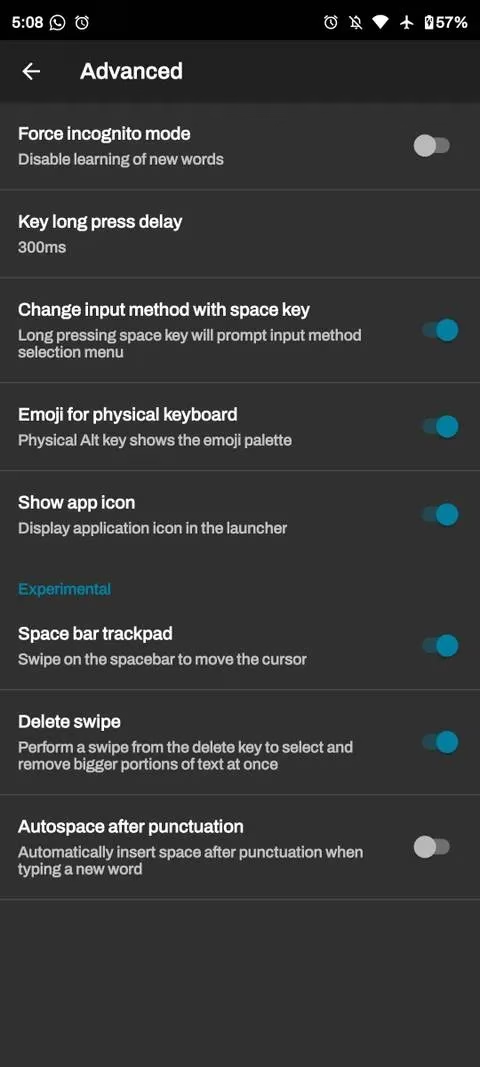
Keyboard apps are notorious data leakers—every keystroke potentially monitored. OpenBoard breaks this cycle with a refreshingly private approach. Built without Google's data-hungry binaries, it offers responsive typing with customizable themes and layouts. The speech-to-text function defaults to Google's engine (which still collects data), but a quick toggle in settings disables it completely. Not on Play Store? No problem—grab it via F-Droid. Typing feels snappier without background telemetry draining resources. It won't autocorrect your life choices, but it won't report them either.
📧 K-9 Mail: Inbox Zero Surveillance
Ditch the data-mining email giants for this robust open-source client. K-9 Mail handles multiple accounts seamlessly while keeping your communications encrypted. Its unified inbox shows all messages, but per-account notifications keep things organized. Security features include email signing and end-to-end encryption support. Though the interface feels less polished than corporate alternatives, it more than compensates with granular control and zero tracking. No algorithms scanning your purchase receipts here—just pure, unmonitored correspondence.
🎬 VLC: The Media Swiss Army Knife
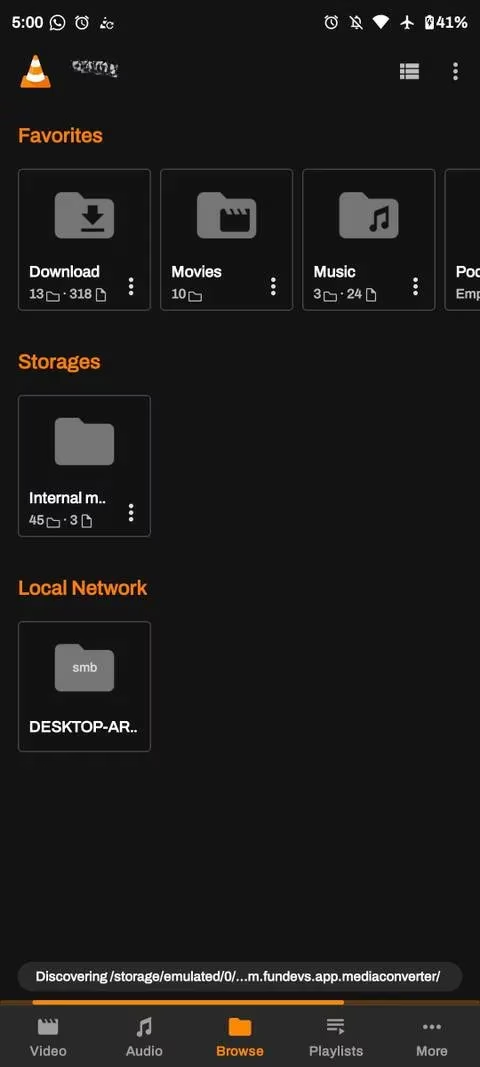
This legendary media player needs no introduction but deserves all the praise. VLC plays literally any file format you throw at it—obscure video codecs, high-res audio, you name it. The Android version mirrors its desktop sibling's power, complete with network streaming, subtitle fetching, and audio-only playback modes. Advanced features like screen lock during playback and variable speed control make it indispensable. While others struggle with DRM-laden content, VLC just works. Free, open-source, and no hidden data harvesting—media freedom at its finest.
📝 Simplenote: Cloud Notes Without Complexity
When Google Keep feels too entangled with your data profile, Simplenote offers sanctuary. This elegantly minimal note-taking app syncs instantly across devices using Markdown formatting. Collaborate securely by adding contributors via email—all changes sync in real-time. Features like version history, tagging, and pinned notes come without ads or trackers. The interface is so clean it practically disappears, leaving just you and your thoughts. For those craving frictionless note-taking without corporate oversight, this is the holy grail.
🗺️ OsmAnd: Offline Mapping Freedom
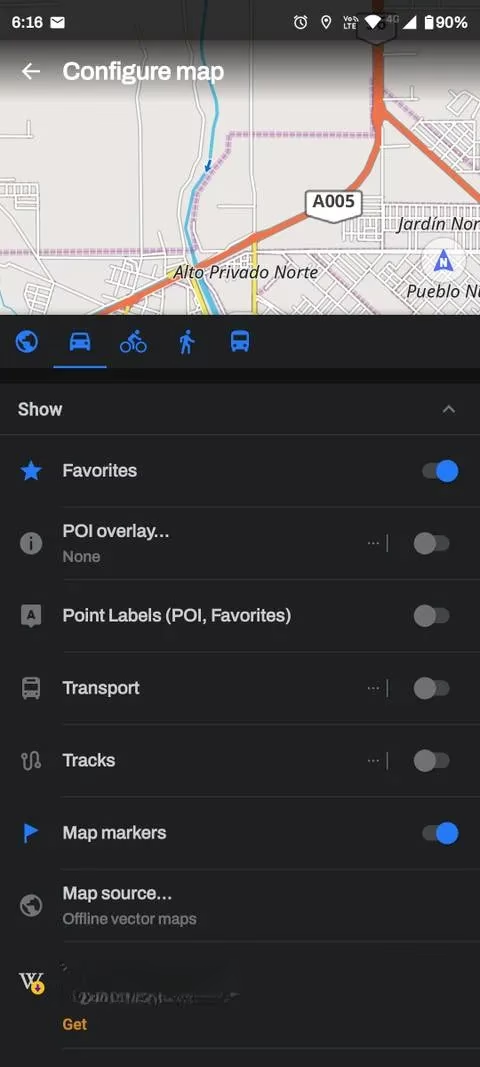
Google Maps knows too much. OsmAnd offers liberation through OpenStreetMap data—free, editable, and community-driven. Download entire regions for offline navigation with turn-by-turn voice guidance. Beyond basic directions, it plots points of interest, allows multimedia place markers, and even integrates street view. The interface seems basic initially but reveals layers of functionality upon exploration. Perfect for travelers avoiding roaming fees or anyone resisting location surveillance. In remote areas with spotty signal? OsmAnd laughs at connectivity challenges.
Switching isn't just about rejecting surveillance—it's about claiming digital autonomy. These open-source gems prove privacy doesn't require sacrificing functionality. Find them not only on Play Store but through alternative platforms like F-Droid where innovation thrives beyond corporate walls.
🔍 Frequently Asked Questions
Q: Why choose open-source over mainstream apps?
A: Three big reasons: privacy (no hidden tracking), customization (tweak to your needs), and performance (less bloat = better speed). Plus, community-driven development often fixes issues faster.
Q: Are these really free? What's the catch?
A: Genuinely free—most survive on donations or optional premium features. No bait-and-switch tactics. Brave's VPN requires subscription, but core features remain free.
Q: Where do I safely download these?
A: Start with F-Droid—the open-source app store. Play Store carries some (Brave, VLC, K-9), but F-Droid has others like OpenBoard with verified signatures.
Q: Will these work on older Android devices?
A: Absolutely! Open-source apps typically use fewer resources. VLC runs smoothly on devices from 2020, while Simple SMS works even on Android Go editions.
Q: How do these impact battery life?
A: Generally positive—less background data collection means less CPU usage. Brave's ad-blocking actually saves power by preventing resource-heavy ads from loading.