
Why a Longtime Tech Writer Is Keeping His iPhone 15 Pro in 2026
Smartphone upgrade cycles are stretching beyond the traditional two-year mark, and a longtime technology writer and editor is offering a detailed case study. Ben Stegner, who has used smartphones since 2011 and upgraded at least once every two years for most of that time, is now keeping his iPhone 15 Pro well past its second anniversary. In 2026, after the iPhone 17 generation failed to pull him back onto the annual upgrade treadmill, he says he is in no hurry to buy the iPhone 18 or any other flagship. The reason is not loyalty or nostalgia; it is a mix of adequate hardware, longer battery life, extended software support, AI fatigue, and changed personal finances.
The Two-Year Upgrade Formula and Its Limits
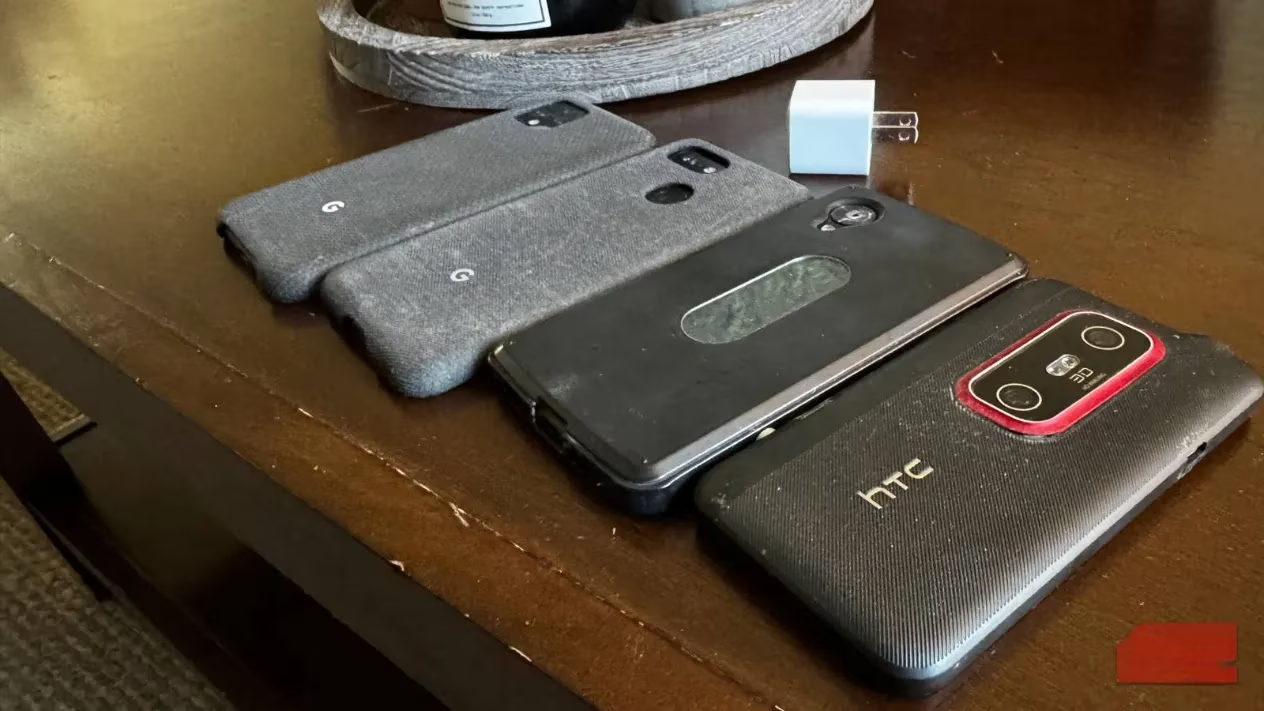
Stegner’s old approach was simple: upgrade every two years. That interval, he argues, balanced new features, battery health, and trade-in value. It was frequent enough to feel exciting but not so frequent that the improvements felt trivial. Yearly upgrades, by contrast, seemed wasteful because annual releases often delivered only modest gains. Waiting three years felt too long: batteries degraded, storage filled up, and new model-exclusive features became tempting.
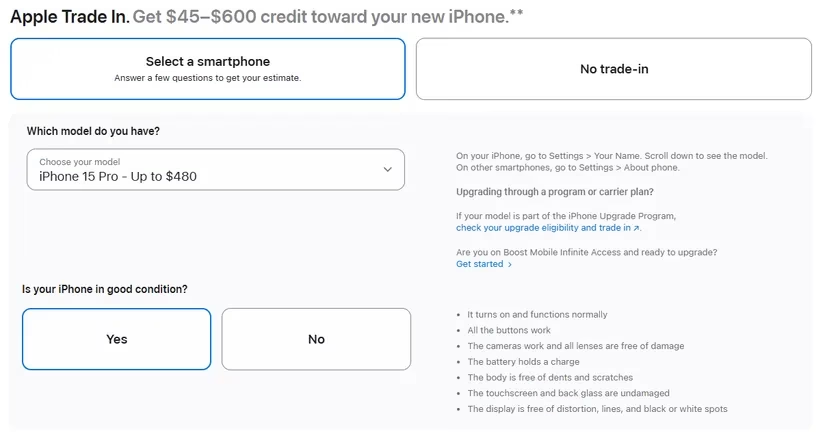
Trade-in math reinforced the two-year rhythm. He paid $1,099 for an iPhone 13 Pro in 2021 and later traded it in for $480 toward an iPhone 15 Pro in 2023. That represented about 44% of the original purchase price coming back after two years—a solid return by smartphone standards.
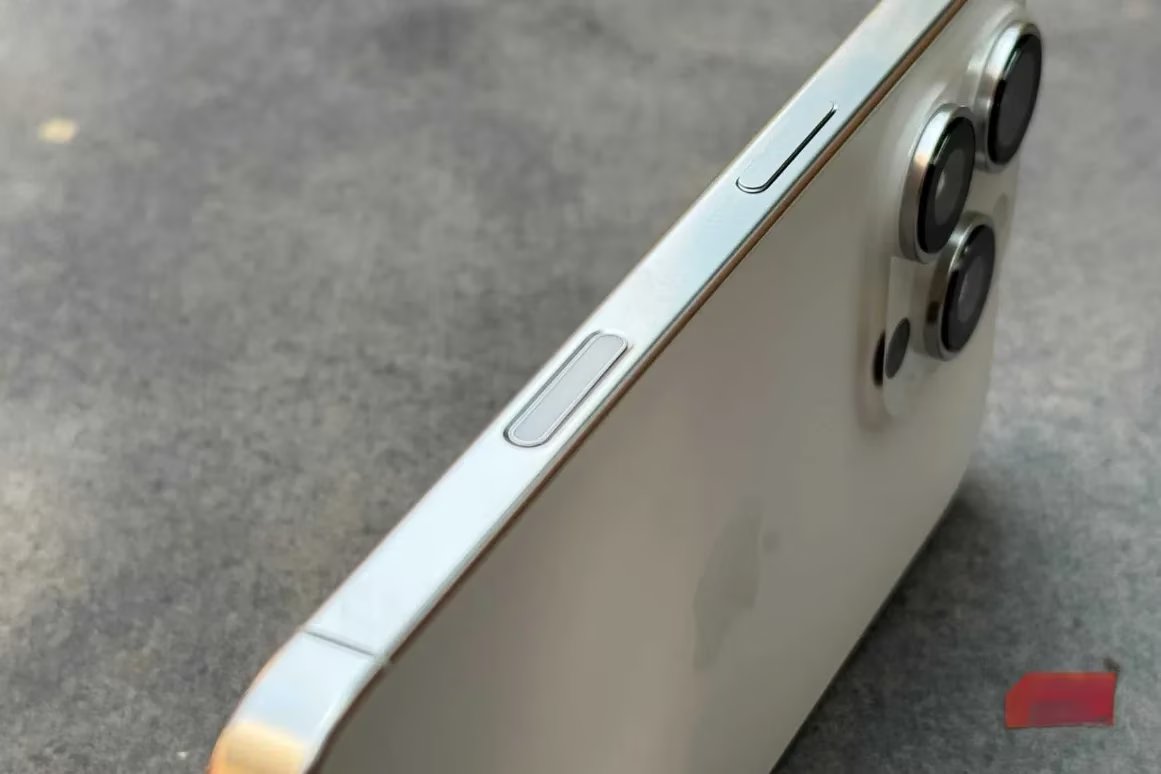
His iPhone 15 Pro arrived on September 22, 2023. It introduced USB-C to the iPhone line and replaced the mute switch with the Action Button. Those changes, plus the 120Hz ProMotion display, made it a meaningful upgrade at the time. The 120Hz refresh rate remains the single most important feature to him. Whenever he uses a 60Hz phone, the difference is immediately obvious.
Why the iPhone 15 Pro Still Feels New in 2026
More than two years later, the device does not feel old. It is not slow, and it has no nagging issues that demand a replacement. Battery health is a major reason. When Stegner assessed the phone in late 2025, it had 425 charge cycles and still reported 95% battery capacity. He uses the charge limit feature to cap charging at 80% most of the time, a habit that helps slow degradation. At roughly 215 cycles per year, he calculated that he could use the phone for about two more years before worrying about a battery replacement.
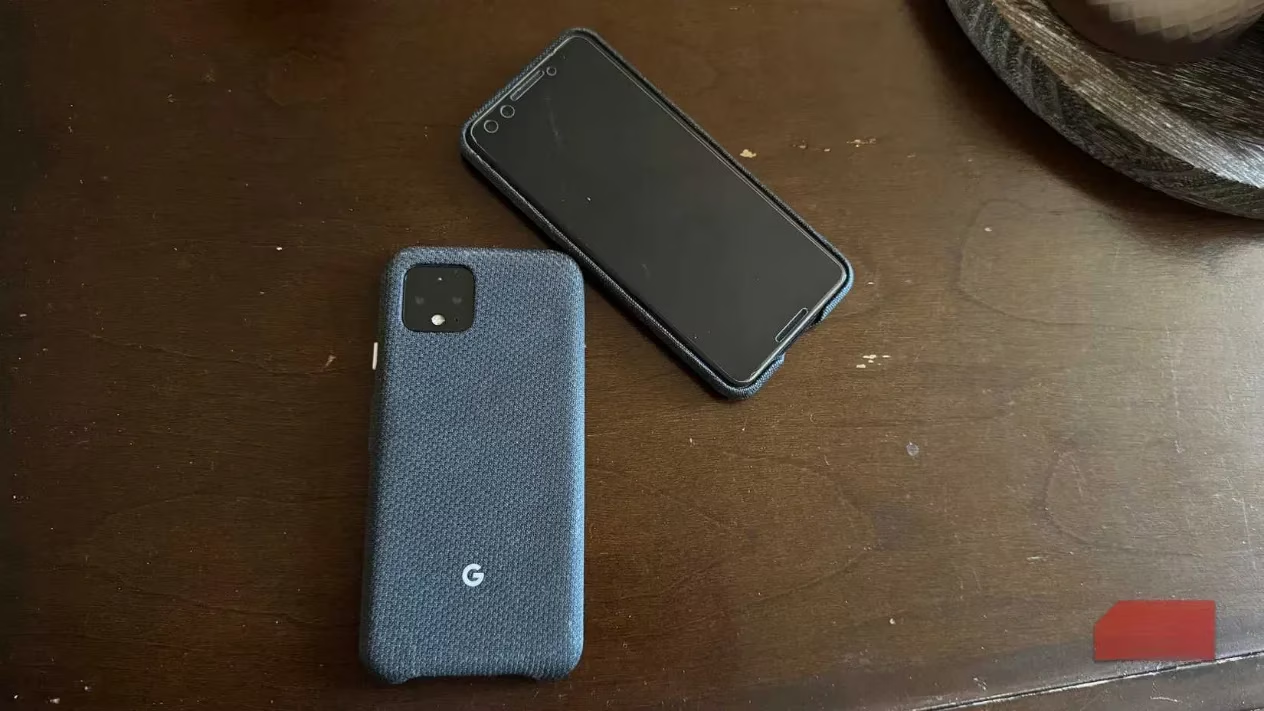
Battery technology has improved across the industry. Apple states that iPhone 14 models and earlier retain 80% of their charge after 500 cycles, while iPhone 15 models and later are rated for 1,000 cycles. Google’s Pixel 3 through Pixel 8 Pro were rated at 800 cycles, and newer Pixel models are rated at 1,000. These ratings mean modern phones can remain usable for longer, reducing the pressure to upgrade.
Software support is another factor. Apple has extended iOS compatibility to older devices. iOS 26, for example, supports the iPhone 11 from 2019. Google promises seven years of OS updates for the Pixel 8 and newer. That longer support window makes a three- or four-year-old phone far more viable than it was a decade ago.
AI Features Are Not a Selling Point
Artificial intelligence has become the centerpiece of recent smartphone launches, but Stegner is unmoved. He has been skeptical of AI from the beginning, though he tried Apple Intelligence to see whether Apple could polish the experience. He disabled it within a week. AI summaries of messages and notifications were widely mocked online, and he has no interest in text generation, image generation, or similar features. For him, communication is about reading another person’s words and responding to them directly—not having an AI summarize what someone else wrote.
Camera improvements also fail to tempt him. Each generation brings better sensors and computational photography, but he is satisfied with the iPhone 15 Pro’s camera. He is not a photography enthusiast who needs the latest hardware. The Camera Control button on newer iPhones seems interesting, but he doubts he would use it often, and not everyone likes it.
Storage, Pricing, and Life Circumstances
Storage is another reason he is comfortable waiting. His iPhone has 256GB, and even with 48GB of Spotify data downloaded, he still has more than 50GB free. He sees no need to move to 512GB. Waiting could also increase the chance that Apple raises base storage in a future model.
The financial argument cuts both ways. A $1,099 phone over two years works out to about $46 per month. For a device used every day, that can be worth it. But when the current phone is nearly as good as the new one, the expense becomes much harder to justify. Stegner also experienced a major life change: he got married within the last year, which brought significant expenses. Budgeting for a phone is one thing; deciding whether the purchase is truly worth it is another.
The Only Real Concern: Trade-In Value
The main downside of waiting is depreciation. Trade-in values fall over time, so holding onto a phone longer means getting less credit toward a future purchase. Even so, Stegner says that is his only concern. He doubts the iPhone 17 would have changed his mind, and he plans to save money for the iPhone 18 instead. In 2026, that decision looks less like an exception and more like a broader trend.
A Broader Shift in Smartphone Culture
Consumers are increasingly asking whether they need a new phone at all. Incremental hardware updates, better battery longevity, longer software support, AI fatigue, and economic caution are all pushing upgrade cycles outward. For Stegner, the result is a first: he is using a single smartphone for more than two years. The two-year upgrade cycle that once felt like the sweet spot now feels optional. In 2026, the smartest upgrade may be no upgrade at all—at least until the iPhone 18 arrives.
Key Takeaways
-
✅ Battery ratings have improved: iPhone 15 and later are rated for 1,000 cycles, and newer Pixels match that figure.
-
✅ Software support is longer: iOS 26 reaches back to the iPhone 11, while Pixel 8 and newer get seven years of OS updates.
-
✅ The current device still meets daily needs: iPhone 15 Pro, 256GB storage, 120Hz display, and USB-C.
-
❌ AI features are not compelling enough to drive a purchase.
-
💰 Cost math matters: $1,099 over 24 months is about $46 per month.
-
🔋 Battery health remains strong: 95% capacity at 425 cycles, helped by an 80% charge limit.
For now, Stegner is content to wait. His experience suggests that the smartphone industry’s upgrade pitch is facing a tougher audience in 2026—one that values longevity, practical improvements, and financial discipline over annual novelty.